

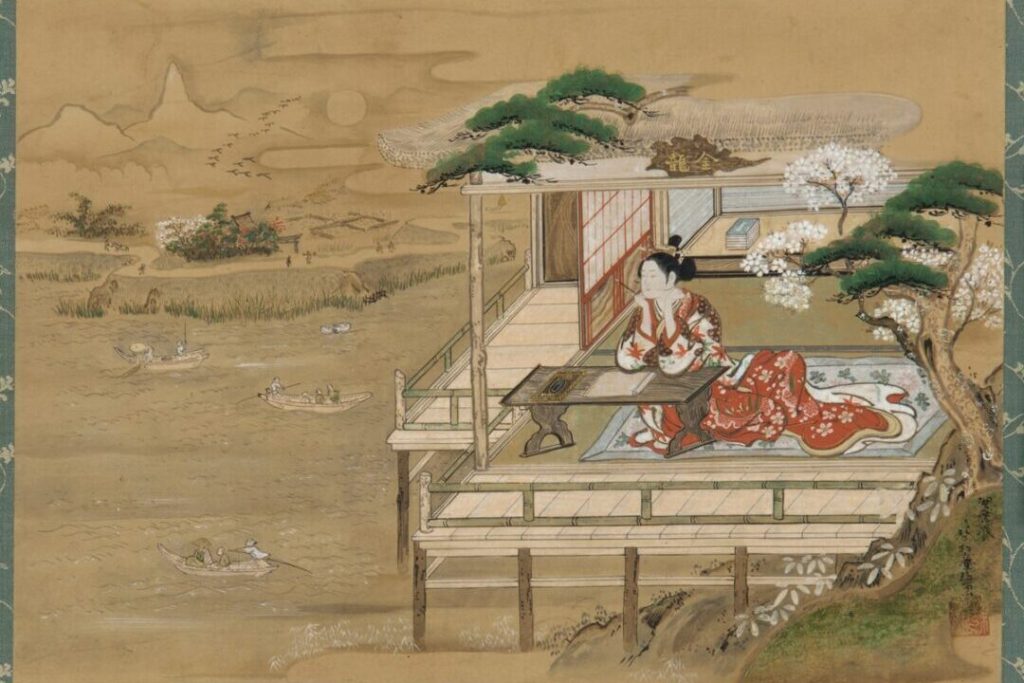
One of the most sexist criticisms of classical novels is that they were written by men, thereby rendering invisible the very important role women played in their creation and development. The Tale of Genji, considered by many specialists to be the first great novel in history, was written over a thousand years ago by a woman: Murasaki Shikibu. Virginia Woolf recognized Murasaki as an exceptional forerunner.
The current evolution of dialogic society and Japan’s new international role make this a favorable moment to introduce this novel in schools. Today’s children consume a great deal of Japanese culture, from Pokémon to sushi, promoted by the market and present in media shaped by power and money. Schools were not created for that purpose, but rather to prevent children from being excluded from humanity’s greatest creations.
The Tale of Genji recounts the life of Prince Hikaru Genji, his personal relationships, his conflicts, and the passage of time. Even more than the plot, what is innovative is the depth with which the author portrays people’s inner communication—their emotions, contradictions, jealousy, affections, losses, and inner transformations. In her depiction of the inner life, themes appear that remain highly relevant today: how does social position influence our opportunities? How are affective relationships formed? How do we face the passage of time, loss, or loneliness?
Becoming aware of this novel helps overcome many prejudices. Alongside works such as The Thousand and One Nights and The Ramayana, it dismantles the colonial prejudice that classical literature was created in the West—a misconception still upheld by both colonial and postcolonial perspectives. Together with the creation of lyric poetry by another woman (Sappho), in contrast to epic literature traditionally created by men, this first novel challenges the sexist prejudice that classical literature was created by men—a misconception maintained both by openly sexist perspectives and by others that, though presented as feminist, remain sexist at their core.
Article translated from Periódico Educación

1st with the most total citations of all categories, among those authors including in Google Scholar "Social Impact" as one of them.