

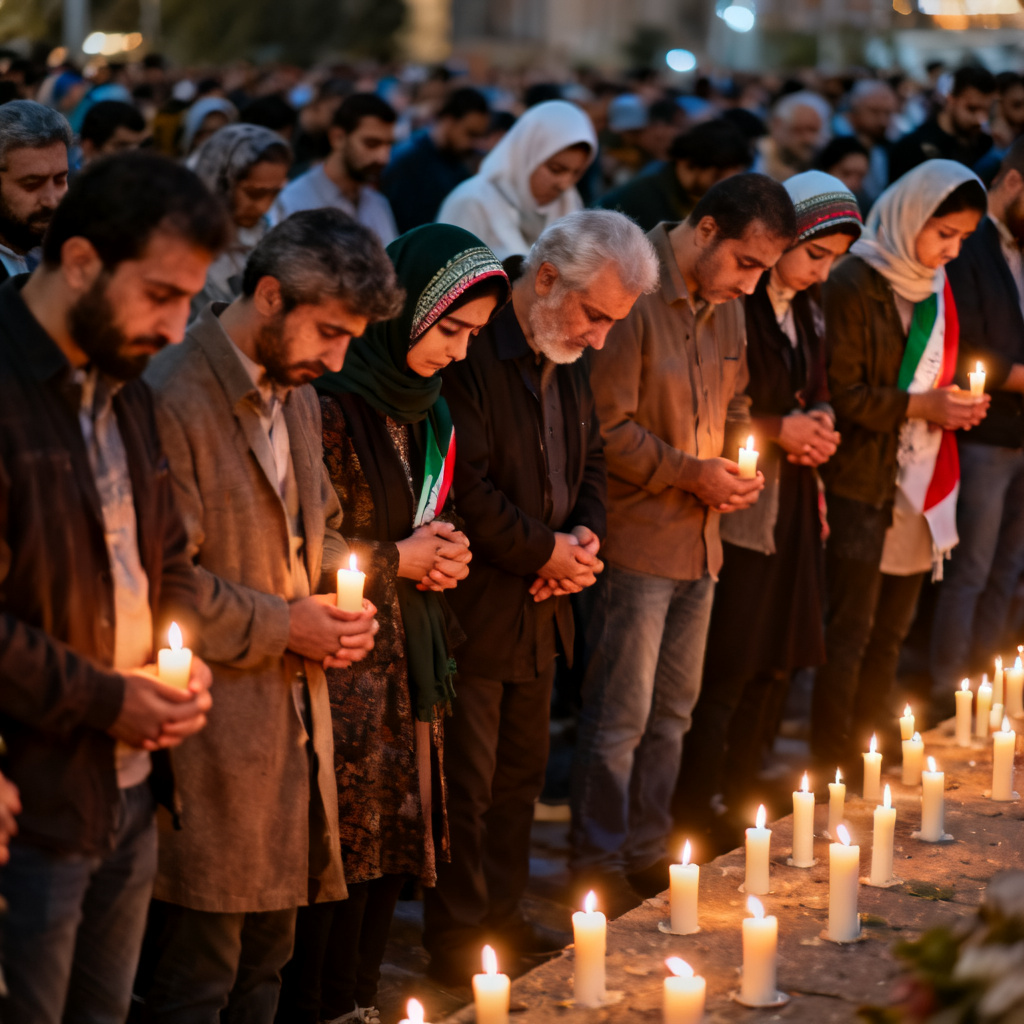
In late February 2026, the United States and Israel launched a large-scale military offensive against Iran. What was initially framed as a short, sharp campaign quickly dragged on for weeks, shattering lives, infrastructure, and any illusion of a swift resolution. While the world counts missiles, casualties and territorial gains, a quieter catastrophe is spreading: the invisible psychological trauma inflicted on Iran’s most vulnerable people—children, pregnant women, the elderly and persons with disabilities. And in a bitter irony, the very government that should be shielding them has, through its staggering incompetence, deepened the crisis.
The physical destruction alone is staggering. As of early April 2026, at least 2,362 civilians had been reported killed and over 32,000 injured, with the highest casualties recorded in Tehran, Hormozgan and Isfahan. More than 125,600 civilian units—homes, schools, hospitals—have been damaged or destroyed. Approximately 3.2 million people were temporarily displaced, women and children making up 60% of that figure. But the war is not merely destroying brick and mortar; it is unraveling minds.
Children have borne the brunt of this conflict. By late March 2026, over 2,200 children had been reported injured or killed across the region, with at least 208 children killed in Iran alone. In the war’s opening days, a missile strike on the Shajareh Tayyebeh girls’ elementary school in Minab killed more than 100 people, the majority schoolgirls whose only crime was being in class. The trauma of such events is not confined to survivors; it radiates outward, poisoning the emotional landscape of an entire generation. Beyond the death toll, the war has dismantled the structures of childhood. Over 760 schools have been destroyed or damaged, robbing children of the stability that classrooms provide. Sleep disturbances, nightmares, reduced concentration and aggressive behaviour have become rampant. For millions of young Iranians, the world has shrunk to the four walls of a house, where every slammed door or dropped piece of cutlery can trigger a startle response—an early warning sign of post-traumatic stress disorder. UNICEF reports that roughly 40% of children and adolescents in conflict-affected parts of Iran require mental health and psychosocial support. Yet the capacity to provide such care is vanishing. A psychiatric hospital in Tehran, the Del Aram Sina facility, was rendered unusable by a US-Israeli strike, leaving patients with PTSD and other conditions without critical treatment. Even the caregivers are being bombed.
For pregnant women, the stress of war is not just emotional; it is biologically catastrophic. Conflict shatters health systems, leading to the collapse of vaccination programmes, maternal care and chronic disease management. Iran’s Health Ministry has scrambled to ensure continued care for pregnant women and newborns, but the destruction of hospitals and emergency response stations makes this promise hollow. Constant fear—of airstrikes, of losing electricity, of not being able to reach a doctor—creates a toxic stress response that can lead to preterm birth, low birth weight and long-term developmental issues for infants. Studies of conflict zones show that prolonged exposure to violence dramatically increases rates of anxiety disorders, depression and PTSD. For a pregnant woman in Tehran, each night is a gamble: will the bombs fall? Will she survive to see her child? These are not abstract fears; they are the daily reality of a population abandoned by its own government.
The elderly and those with chronic illnesses or disabilities are uniquely vulnerable. They are less able to flee, more dependent on regular medical care and more susceptible to the psychological erosion of constant fear. The Iranian Health Ministry itself has urged the elderly, children, pregnant women and those with chronic conditions to stay indoors and wear masks—a grim admission that simply breathing the air may now be dangerous. Yet for many, staying indoors means being trapped in a collapsing city without power, water or medicine. Social isolation, a known risk factor for mental decline in the elderly, has been forced upon them by the war. Older Iranians face not only the terror of bombardment but the loneliness of facing it alone. For persons with disabilities, who may require mobility aids, special transportation or personal assistance, the destruction of infrastructure and the chaos of displacement is a life-threatening barrier to survival. The UN has identified these groups as being “particularly at risk,” yet the government’s response has been marked by neglect and mismanagement.
While no government can fully shield its people from the horrors of war, the Iranian regime has consistently made things worse. Its response to the crisis has been characterised by denial, propaganda and a chilling disregard for human life. Even before the war, the regime was cracking down brutally on domestic protests, killing an unknown number of demonstrators—a practice that continued even as bombs fell. Citizens were caught between foreign airstrikes and their own government’s violence. The regime’s approach to mental health has been particularly callous. Instead of investing in psychological support, it has used psychological warfare against its own people, launching an information war to “destabilise” and “undermine psychological security” while targeting public morale. For ordinary Iranians, the state they might turn to for help has become an active source of distress.
The destruction of healthcare infrastructure is partly a consequence of war, but the regime’s failures in emergency planning have magnified the damage. With 316 healthcare centres, emergency bases and hospitals damaged, the government has been unable to provide a coherent medical response. The closure of the Del Aram Sina Psychiatric Hospital is a case in point: a direct strike rendered it unusable, but there was no backup plan, no alternative facility prepared to take in the most psychologically fragile patients. This is not bad luck; it is a failure of governance. Years of sanctions, coupled with regime corruption and mismanagement, had already crippled Iran’s economy before the war. The conflict accelerated the collapse: mass job layoffs, destroyed infrastructure and rising poverty mean that even if a ceasefire holds, the psychological scars will be deepened by material desperation. Iranians fear that the war’s end will only mark the beginning of a new phase of domestic repression.
The world’s attention is fixed on geopolitics, oil prices and military strategy. But the true cost of this war is being paid in the silent suffering of its most innocent victims: children who flinch at the sound of a closing door, pregnant women who fear they will never hold healthy babies, elderly people who die alone in the dark, persons with disabilities who cannot escape the ruins of their homes. These are the faces of a crisis that no ceasefire can immediately heal. The Iranian government’s incompetence is not a side note; it is central to the scale of this catastrophe. A government that brutalises its own people during peacetime, that prioritises propaganda over protection and that fails to plan for the most basic needs of its population during war does not merely fail—it actively multiplies the suffering. The bombs will eventually stop. The rubble will be cleared. But the psychological wounds of 2026 will endure for generations, a lasting monument to the cruelty of war and the bankruptcy of a regime that proved itself incapable of safeguarding its own people.

Assistant Professor at the University of Social Welfare and Rehabilitation Sciences in Tehran, Iran. He earned his Ph.D. in Gerontology with honors in 2017, following his Bachelor's and Master's degrees in Rehabilitation Sciences. Dr. Rashedi is an esteemed member of several prestigious organizations, including the Gerontological Society of America (GSA), the International Society to Advance Alzheimer's Research and Treatment (ISTAART), and the American Psychological Association (APA). His research primarily focuses on mental health and psychogeriatrics. Since 2019, Dr. Rashedi has been a Senior Collaborator for the Global Burden of Disease (GBD) at the Institute for Health Metrics Evaluation (IHME) at the University of Washington in the United States.