

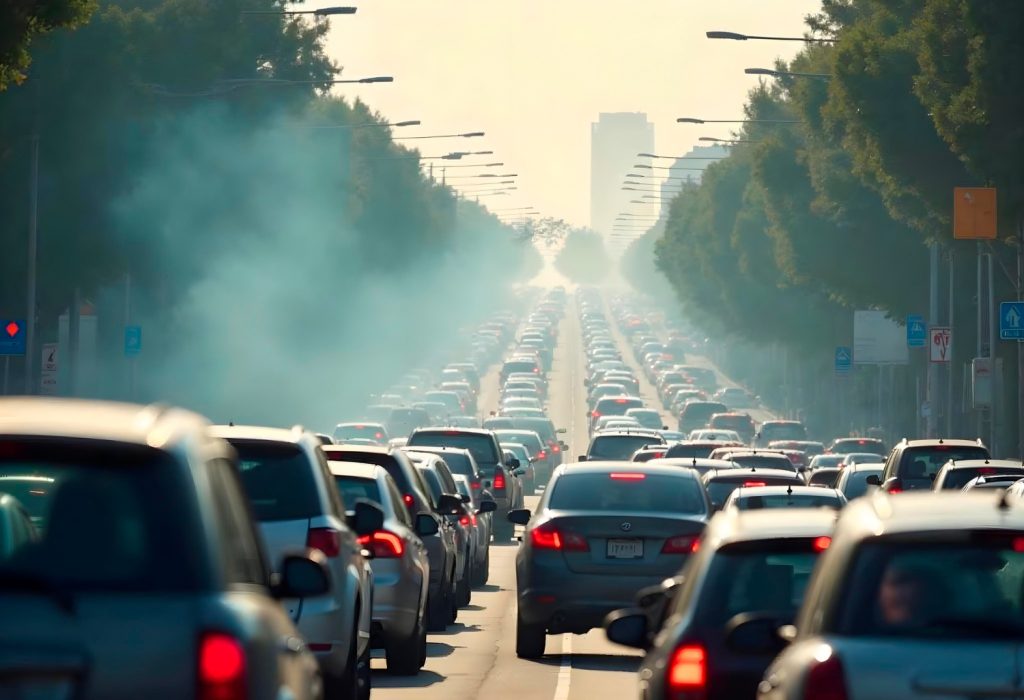
A new scientific study published in PNAS Nexus finds that early-warning pollution alerts can make a real difference in both air quality and people’s health. The research looks at how actions taken when authorities issue pollution alerts help reduce harmful air pollutants and prevent deaths.
Air pollution, especially tiny particles called PM2.5 and gases like nitrogen dioxide (NO₂), is a major threat to health around the world. These pollutants come from cars, factories, construction, and burning coal. Long-term exposure can contribute to heart and lung disease and even early death. While many countries have rules to control pollution overall, sudden pollution spikes still happen, especially in big cities. This study focuses on whether short-term pollution alerts can help reduce those spikes and protect public health.
The researchers collected data from 57 cities in northern China between 2018 and 2022. They compared the air quality during days when pollution alerts triggered interventions, such as restrictions on traffic or factory operations, with a hypothetical scenario where no alerts were issued. They used advanced machine‑learning models to estimate what pollution levels would have looked like without those alerts.
The results were clear: when pollution alerts triggered action, levels of PM2.5 dropped by roughly 20 % to 40 %, and NO₂ dropped by about 5 % to 25 %, depending on the city. These decreases are important because even small reductions in particle pollution can improve health.
Because of these reduced pollution levels, the study estimates that nearly 54,000 premature deaths were prevented over the five‑year period. Most of these avoided deaths occurred in heavily industrialised and densely populated regions where pollution tends to rise sharply and the interventions had bigger effects.
The findings suggest that pollution alerts are not just warnings: they act as effective tools for triggering short‑term measures that improve air quality and protect human health. Measures tied to alerts like limiting heavy traffic or reducing emissions from industrial sources can therefore be valuable steps alongside long‑term pollution reduction strategies.
This study is particularly important because it uses real air quality data over several years and many cities, giving strong evidence that prompt action during pollution events can reduce exposure to harmful air pollutants and save lives.

Editor of Daily 27.
Predoctoral researcher at the Department of Sociology in University of Barcelona.