

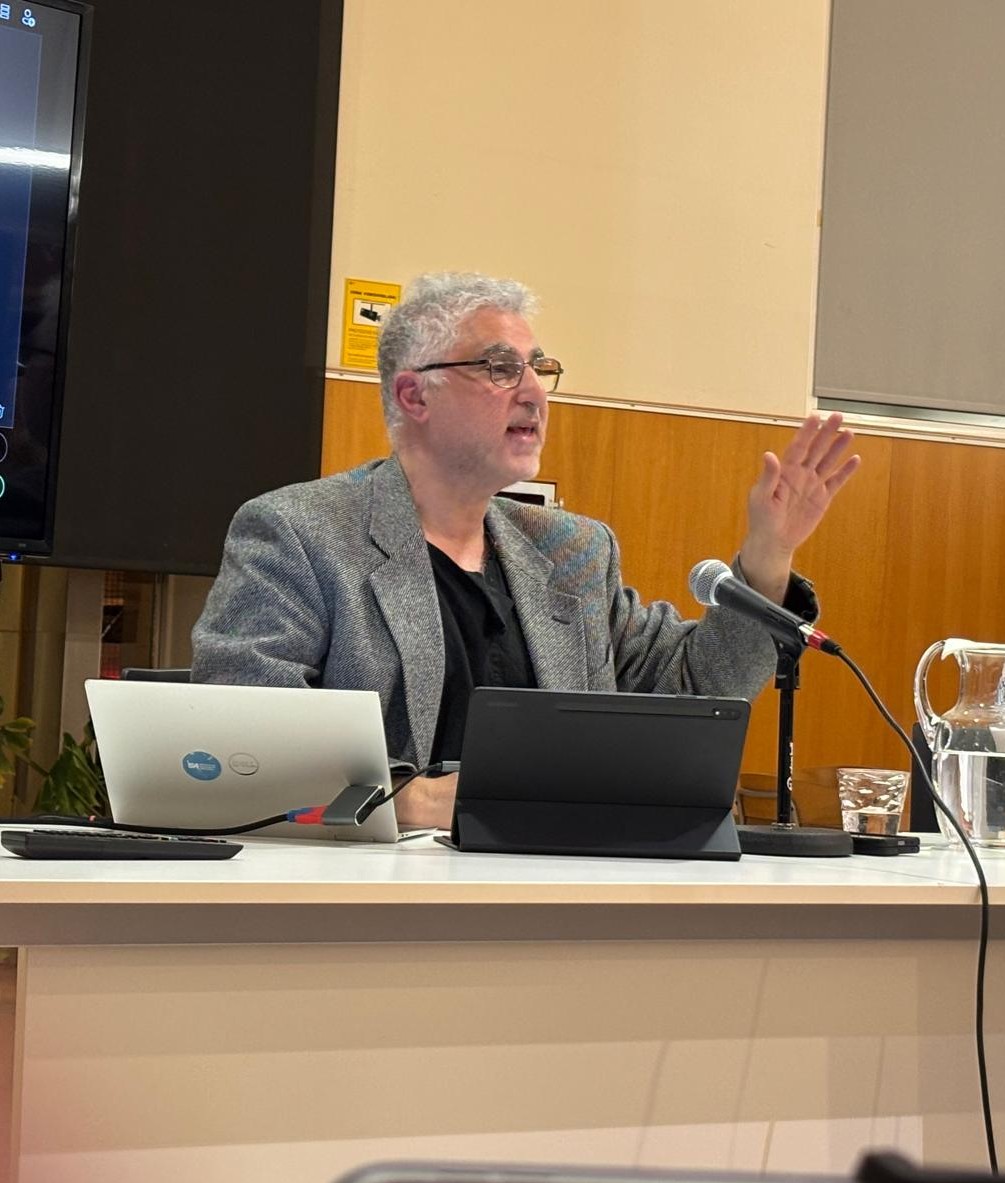
They even had to improvise new rows of seats in the auditorium. Diverse people told me it was unbelievable, because that space had never filled up before and usually had very low attendance for any kind of lecture. It is true that part of the draw was that the speaker was a Palestinian sociologist living in Beirut. However, those of us who were born, live, and work in the city of Reus know that the main reason for such an extraordinary impact lies in the critique of symbolic liberalism and in the alternative of a dialogical sociology proposed in the book by Sari Hanafi that was presented that day. The following day, the same event was recreated in Barcelona, and the author also participated in many other venues and in numerous vivid and diverse conversations. The previous week, he led two very dialogic sessions in Granada.
The audience showed great interest in the theoretical analyses of liberalism presented in the first chapters. However, the debate “heated up” when discussing the last four chapters, in which the author tackles, with unusual rigor and courage, four highly current issues that many authors comment on but do not dare to analyze sociologically. He shed light that made social controversies surrounding cancel culture, religious and ideological pluralism, sexual diversity, and the tension between family authority and public institutions clearer.
The written communications and conversations that followed his visit, far from marking an end, have opened the door to new debates, seminars, and lectures. The dialogical sociology of this book now extends toward new topics, audiences, and contexts. In addition to academic sessions, and in keeping with his principle of co-creation, Sari Hanafi spent considerable time in conversation with people from two working-class areas of Catalonia who have, for decades, been carrying out initiatives that transform all dimensions of their territories. Those who had the opportunity to listen to him or to be heard by him are not the same after the visit—they feel they have grown, and so has he.

Serra Húnter Fellow of Sociology at Universitat Rovira i Virgili.
Former DAAD-Gastprofessorin at Julius-Maximilians-Universität Würzburg