

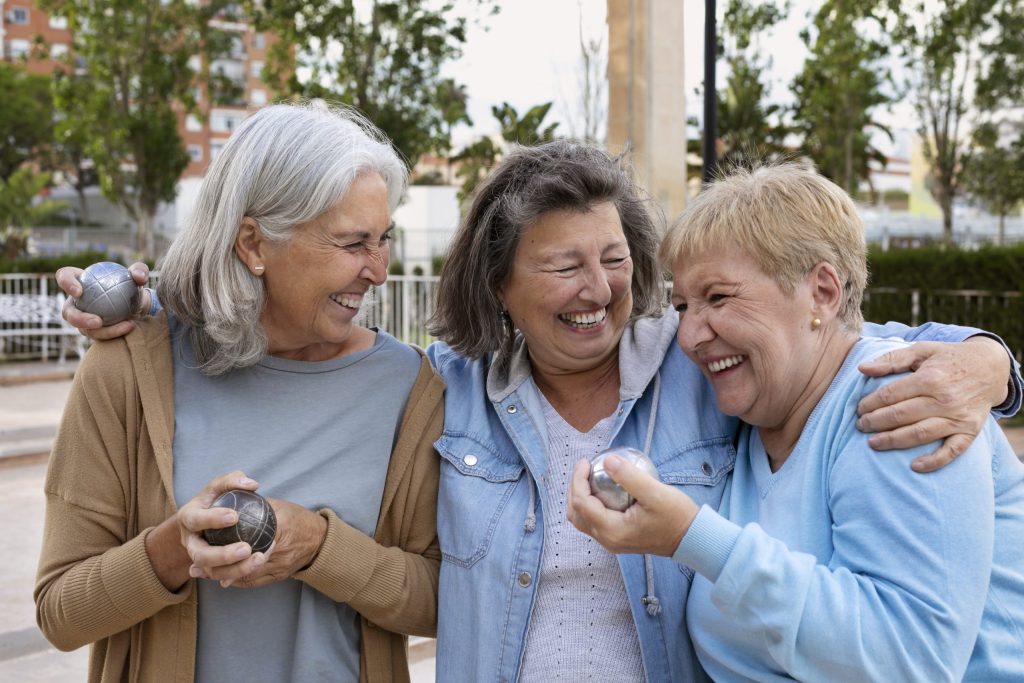
International Day of Happiness
A recent study published in the International Journal of Aging and Human Development examines how close relationships influence happiness in older adults. The research focuses on connections with spouses, children, and friends, and how these relationships develop over time. The study used data from the Health and Retirement Study, a large long-term survey of adults aged 50 and older. With more than 15,000 participants and repeated data over several years, researchers were able to observe how relationships and happiness affect each other as people age.
One of the main findings is that close relationships are strongly linked to happiness in later life. Older adults who maintain meaningful and supportive connections tend to report higher levels of well-being. These relationships provide emotional support, reduce feelings of loneliness, and give people a sense of purpose.
However, the relationship between social connections and happiness is not immediate or simple. At first, changes in relationships do not always lead to quick changes in happiness. Over time, though, a “carry-over effect” appears. This means that stable and positive relationships gradually contribute to greater happiness as people grow older.
Marriage also plays an important role. Married individuals often report higher happiness levels, but the study highlights that the quality of the relationship matters more than marital status itself. Supportive and stable partnerships are what truly make a difference.
Interestingly, the findings of this study are consistent with results from the famous Harvard Study of Adult Development, one of the longest-running studies on happiness, which began in 1938. This research has followed participants for over 80 years and reached a similar conclusion: strong, close relationships are the most important factor for both happiness and health. Harvard Study of Adult Development has shown that people who are more socially connected live longer, stay healthier, and feel happier than those who are isolated. Both studies also stress that the quality of relationships is more important than the number of connections. Having many acquaintances is less beneficial than having a few deep, supportive bonds.
Finally, the research highlights that not all relationships improve happiness. Conflict, stress, or lack of support can reduce well-being. This shows that positive and zero violent interactions are key. In conclusion, the study by Abaei & Martin (2026) reinforces an important idea: happiness in later life is deeply connected to strong, stable relationships. Together with long-term evidence from Harvard, it suggests that investing time and effort in meaningful connections is one of the most effective ways to live a happier and healthier life. High-quality relationships are the best investment in a happy life.

Editor of Daily 27.
Predoctoral researcher at the Department of Sociology in University of Barcelona.