

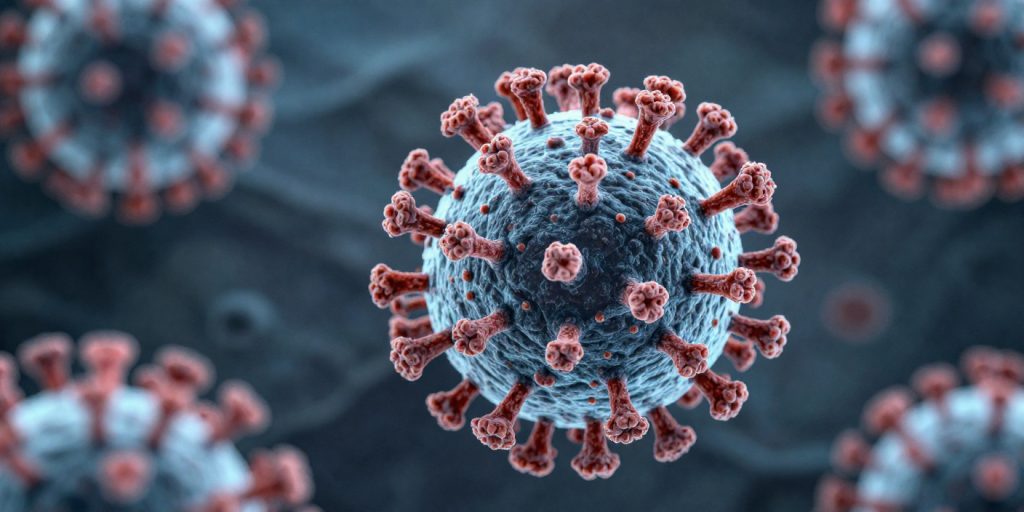
The Andes virus (ANDV) is an epidemiological exception in the Americas, as it is the only orthohantavirus with robust evidence of sustained person-to-person transmission, a feature that has transformed the understanding of hantavirus spread in the region.
Recent studies have identified key genetic mutations associated with this unique ability. A complete genome analysis revealed three amino acid substitutions present exclusively in clade 2 of ANDV (strains linked to outbreaks with high person-to-person transmission, such as in Epuyén, Argentina) that are absent in non-transmissible strains. These include two changes in the nonstructural protein NSs (Q40R and N47S) and one mutation in the glycoprotein Gc (T641I), located in the signal peptide near the WAASA cleavage site. This threonine-to-isoleucine substitution may alter the efficiency of glycoprotein trafficking and processing, thereby explaining its enhanced dissemination potential. Notably, although unique, this transmission is limited and requires close and prolonged contact with the infected person.
In contrast, other orthohantaviruses in this region lack interhuman transmission capacity. The Juquitiba virus (Brazil), Laguna Negra virus (Paraguay/Bolivia), and Lechiguanas virus (Argentina) are all highly pathogenic but are transmitted exclusively through aerosol exposure to excreta from reservoir rodents, primarily from the subfamily Sigmodontinae. Although equally lethal, their epidemiology strictly depends on rodent contact. In Venezuela, the Maporal virus (MAPV) has been shown to cause HPS‑like disease in animal models but has never been linked to human cases; therefore, its zoonotic potential remains uncertain. Choclo and Calabazo viruses are endemic to Panama. Choclo virus is the causative agent of HPS in this region, with a reported case fatality rate of 20‑22%. The Calabazo virus appears to lack human pathogenicity. Unlike ANDV, both are transmitted solely by rodents, although human seroprevalence in some areas of Panama may exceed 30%, suggesting frequent exposure but infrequent or mild disease.
In Colombia, in addition to seroprevalence findings in humans and rodents, four cases of hantavirus infection have been diagnosed through seroconversion. The clinical presentation is similar to that of Panamanian cases, with no pulmonary edema and normal chest radiography. This clinical spectrum suggests the circulation of a strain less virulent than Andes clade‑2 and Sin Nombre viruses (United States/Canada). Hantavirus reservoirs are diverse, and viruses appear to have evolved and adapted to each rodent species (and perhaps to each country).
In conclusion, the Andes virus represents an epidemiological anomaly driven by a specific set of mutations that confer a unique capacity for interhuman transmission, a phenomenon absent from all other pathogenic orthohantaviruses on the continent. Nevertheless, its spread is limited and depends on a wild, non-synanthropic (non-urban) rodent; therefore, its epidemic potential is not comparable to that of COVID‑19 or, even less, to measles.
Hantavirus of public health importance in South America and Panama
| Viruses | Country | Main Reservoir (Sigmodontinae) | Human Pathogen and (HPS)*. CFR** | Transmission person to person | Mutations / characteristics |
| Andes (ANDV) | Argentina, Chile | Oligoryzomys longicaudatus (colilargo) | Yes. CFR 50% | Outbreaks with sustained chains like the current one on the MV Hondius cruise ship | Clade 2 (transmissible strains): NSs Q40R + N47S, Gc T641I. T641I mutation in Gc signal peptide → alters trafficking and WAASA cleavage. Also virulence markers in N (A21T, N46S, A253). |
| Juquitiba (JUQV) | Brasil, Sudeste | Oligoryzomys nigripes | Yes. CFR ~40% | No | Genetically close to ANDV, but without NSs/Gc mutations associated with human-to-human transmission. |
| Laguna Negra (LANV) | Paraguay, Bolivia, North of Argentina | Calomys laucha (laucha chica) | Yes. CFR ~30‑40% | No | It features the preserved N terminal HVD motif, but without the NSs (Q40R/N47S) or T641I substitutions. |
| Lechiguanas (LECV) | Argentina, East | Oligoryzomys flavescens (colilargo chico) | Yes. CFR ~21‑30% | No | It is an ANDV-like virus (same lineage), but phylogenetically separate from the transmissible clade. It lacks the distinctive mutations.. |
| Maporal (MAPV) | Venezuela, posiblemente Colombia | Oligoryzomys costaricensis (sin confirmación definitiva) | No human cases have confirmed. (Seropositive in rodents) | No | Pathogenic in a hamster model (similar to ANDV), but with no documented evidence of human infection. More divergent genome. |
| Choclo | Panamá | Oligoryzomys fulvescens (Centro american long tail | Yes. CFR ~20‑22% (less than ANDV) | No | High percentage of seropositive individuals in asymptomatic humans. No mutations in NSs or the WAASA site associated with transmission have been described. |
| Calabazo | Panamá | Zygodontomys brevicauda (Cane rat) | Non pathogen | No | Genetically distant from other pathogenic orthohantaviruses. It circulates in rodents without causing apparent human disease. |
HPS= Human Pulmonary Syndrome.
CFR** = Case Fatality Rate (tasa de letalidad entre casos sintomáticos de HPS).

Professor of Microbiology at the University of Córdoba; Director of the Institute of Biological Research of the Tropics. Researcher in emerging and re-emerging diseases and public health.