

International Hyperemesis Gravidarum (HG) Awareness Day
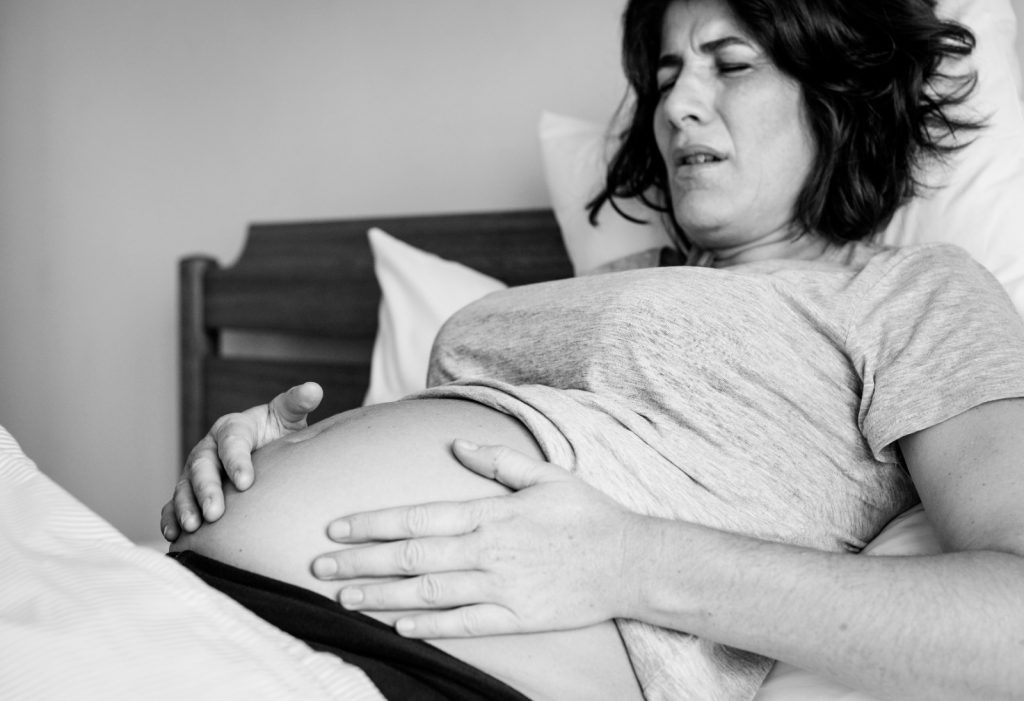
When people imagine pregnancy sickness, they usually imagine discomfort. Crackers on the bedside table and ginger, morning nausea… a difficult few weeks. They do not imagine being unable to swallow water, medication, or even saliva. They do not imagine lying in bed trying to breathe “just enough” because even breathing too deeply may unleash another wave of retching. They do not imagine vomiting blood. They do not imagine fearing for their baby’s life or their own. Hyperemesis gravidarum (HG) exists in that distance between what people imagine and what some women actually live.
I remember my first pregnancy. Within weeks, my world narrowed to survival. The nausea became constant and the vomiting relentless. Some days I vomited more than twenty times. Still, many people around me, including healthcare professionals, treated it as ordinary pregnancy sickness. “All pregnant women vomit,” I was told repeatedly. I felt like a failure, to my baby, to myself. But I made it through, and even though at first I was not sure of being able to go through it again, our desire for a bigger family, and thinking we now had more knowledge and resources made us make the move.
But during my second pregnancy, the situation became even more severe. I could not tolerate food, water, or even my own saliva, and I would eventually spend 85 days in the hospital with a PICC line. At my worst, I felt myself slowly disappearing inside my own body. And yet, even there, I was sometimes met with suspicion instead of care. I was asked questions like: “Do you have problems with your husband?”, “Do you really want this baby?”, “Maybe you are waiting for the pregnancy to end…” — as if not improving was somehow a choice, as if the illness needed a psychological explanation to be believed.
Unfortunately, my experience is not exceptional. The minimization and psychologization of HG has shaped the history of the disease for decades. Despite being one of the leading causes of hospitalization in early pregnancy — and even a contributor to maternal mortality in low-income countries — HG has often been misunderstood, dismissed, or reduced to an exaggerated response to pregnancy. In fact, scientific understanding lagged so far behind patients’ experiences that harmful practices became normalized for years. In 2022, French national guidelines on HG management still had to explicitly state that women with HG should not be isolated — not placed alone in dark rooms, deprived of visits, phones, or social contact. The fact that modern medical guidelines still needed to clarify this reveals how poorly understood the illness has been. Because HG is not only physically devastating, it is profoundly isolating.
During my pregnancies, I slowly disappeared from ordinary life. Friendships changed. Some people faded away, unable to understand why I no longer seemed like myself anymore. But other relationships became stronger than ever. Friends and loved ones kept showing up quietly, without demanding that I pretend to be okay. The doctors who did listen instead of questioning whether the illness was psychological. And then there were the other women. Near the end of my first pregnancy, I found an online support group for women with HG. I still remember crying while reading their messages because, for the first time, I recognized myself in someone else’s words. Women describing the same guilt, the same fear, the same pain. They shared practical advice, encouragement, and provided something medicine too often failed to provide: a feeling of being seen and heard.
Thankfully, science is finally beginning to catch up to what patients have been saying for years. Research increasingly shows that HG is a severe biological illness involving dehydration, electrolyte imbalance, malnutrition, major weight loss, and, in some cases, profound psychological trauma. A major scientific breakthrough came recently with the identification of the hormone GDF15 as a key driver of HG. A landmark Nature study showed that the placenta produces extremely high levels of this hormone during pregnancy, and that women who develop HG appear unusually sensitive to its sudden rise. The study also suggested that prior exposure to GDF15 before pregnancy may influence susceptibility, opening entirely new possibilities for treatment and prevention.
For many women, these discoveries mean more than scientific progress. To us, they mean that we’re not crazy, that we deserve better. Researchers are now exploring therapies targeting the GDF15 pathway, and understanding of HG as a serious biological illness is growing rapidly. Slowly, the myths that have harmed women for generations are beginning to break.
I still remember the moment both of my pregnancies ended. After months of constant nausea, the vomiting stopped almost immediately after giving birth. Suddenly, I could breathe normally again, I could drink water, I could eat, I could think beyond the next wave of sickness. I remember realizing, almost with disbelief, that I was still there underneath it all.
On today’s International Hyperemesis Gravidarum (HG) Awareness Day, this is my takeaway: science matters enormously because understanding changes treatment, and treatment changes lives. But alongside science, women also need to be believed, accompanied, and held close. Sometimes the people who save you are not the ones who cure you, but the ones who refuse to let you disappear.
References
- Fejzo, M. S., Arzy, D., Tian, R., MacGibbon, K. W., Mullin, P. M., & others. (2024). GDF15 linked to maternal risk of nausea and vomiting during pregnancy. Nature, 625(7995), 760–767. https://doi.org/10.1038/s41586-023-06921-9
- Koren, G., & Maltepe, C. (2022). French College of Gynaecologists and Obstetricians (CNGOF) guidelines for the management of nausea and vomiting in pregnancy and hyperemesis gravidarum. Journal de Gynécologie Obstétrique et Biologie de la Reproduction. https://doi.org/10.1016/j.jogoh.2022.102473
- Marlena S. Fejzo, M. S., & Mullin, P. M. (2023). Hyperemesis gravidarum: New insights into disease pathogenesis and treatment. Trends in Molecular Medicine, 29(11), 987–1000. https://doi.org/10.1016/j.molmed.2023.08.004

Lecturer at the Sociology Department, University of Barcelona