

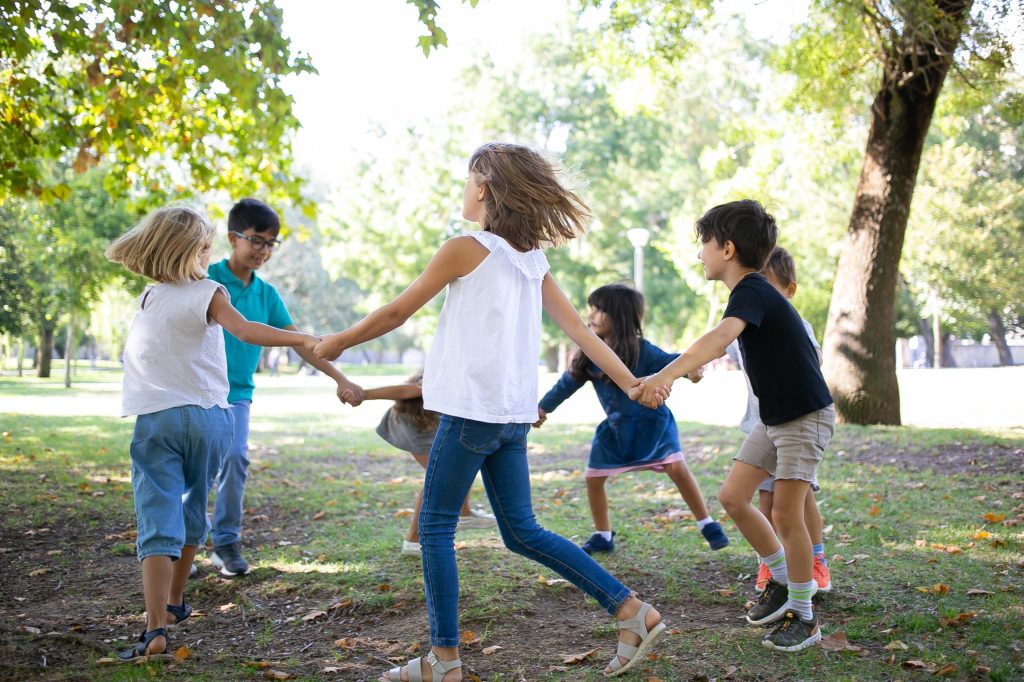
What do today’s children and young people do with their free time? This is a question I often ask myself because, years ago, when I was a child, we spent our time outdoors, sharing it with other children. But little by little, our streets are becoming emptier—emptier of affection, laughter, conversations, footballs, and even skipping ropes.
So, what is happening?
The Childhood, Adolescence and Digital Well-being Report (2025), published by UNICEF Spain, sheds some light on the issue by showing that video games and social media have become the main forms of leisure. According to the report, 62.5% of minors play video games almost every day, spending an average of 7.14 hours per week gaming. In addition, 8.9% spend more than five hours a day on social media during the week, a figure that rises to 19.9% at weekends.
So, what are we left with today? A culture that revolves largely around screens, to the point of changing the way we relate to and interact with one another. And what are we, as a society, doing about it? What responsibilities do we have?
This is not about demonising technology or eliminating screens. Rather, it is about rethinking, as a society, the kinds of experiences we are offering so that children and young people genuinely want to devote their free time to them.
We should ask ourselves who we want to serve and whether there is truly equal access to extracurricular activities. For example, how many of these activities are designed with an inclusive approach that embraces social, economic, functional, cultural, gender, and linguistic diversity, among many other forms of diversity?
Perhaps we should create new educational spaces that allow young people to broaden their knowledge or even build communities based on psychological and emotional well-being. Personally, I believe this could be achieved through cultural, sporting, artistic, or community-based initiatives that can compete with the appeal of digital technologies and, for at least a few hours, encourage young people to step away from screens and focus instead on critical thinking, creativity, active listening, and above all, meaningful participation.
These activities—and even something as simple as playing outside—do far more than entertain. They foster the development of skills, meaningful relationships, well-being, and learning through experiences that no screen can truly replace. In this regard, Article 31 of the United Nations Convention on the Rights of the Child (1989) recognises every child’s right to rest, play, and participate freely in cultural, artistic, and recreational life. It also establishes the obligation of States Parties to respect and promote equal opportunities for participation.
Since today, 10 July, is World Beatles Day, why not use our free time to learn how to live in community, where responsibilities are shared and dreams and projects are collective?
“A dream you dream alone is only a dream. A dream you dream together is reality.” — John Lennon

PhD candidate in Education and a predoctoral researcher funded through the ACIF programme of the Generalitat Valenciana in the Department of Theory and History of Education at Jaume I University (Spain). She is a member of the EDARSO (Education, Art and Society) research group. Her research focuses on educational improvement and transformation through music education. Using a qualitative research approach, she studies inclusive education, agency, the ethics of care, and community transformation.