

Collective celebrations have accompanied human societies for centuries, functioning as powerful mechanisms of social cohesion. A contemporary example that clearly illustrates this phenomenon is Saint Patrick’s Day. The holiday is celebrated every year on March 17 in honor of Saint Patrick, a 5th-century Christian missionary credited with helping spread Christianity throughout Ireland. According to historical tradition, Patrick used the shamrock to explain the concept of the Holy Trinity to the Irish people. Over time, the date of his death became a religious feast day, which gradually evolved into a broader national celebration of Irish culture, history, and identity.
Originally a religious commemoration, Saint Patrick’s Day has developed into a global cultural event celebrated through parades, music, and public gatherings. These collective practices provide an ideal case study for understanding how rituals strengthen social bonds and reinforce cultural identity.
From a sociological perspective, festive rituals reinforce shared narratives, values, and traditions. During Saint Patrick’s Day, millions of people participate in similar activities—wearing green clothing, attending parades, listening to Irish music, and gathering in public spaces. These shared actions create a symbolic framework that connects individuals within a larger community. The sociologist Émile Durkheim described this phenomenon as collective effervescence: a state of shared emotional intensity that emerges when individuals participate in the same ritual experience. Through these synchronized emotions, individuals feel more strongly connected to the group.
Empirical research on St. Patrick’s Day celebrations supports this sociological interpretation. A study by Aisling O’Donnell and colleagues examined how participants perceive St. Patrick’s Day parades as expressions of national identity. Through interviews conducted with attendees at parades in Dublin and Belfast, the researchers found that such events help define who is considered part of the national community and reinforce positive images of Irish identity. Participants described the celebrations as “something that unites us all,” highlighting the symbolic power of collective festivities in shaping shared social identities.
Neuroscience and social psychology also help explain why these events generate strong feelings of belonging. Participating in collective activities such as singing, dancing, and marching in parades can stimulate the release of neurotransmitters like dopamine and oxytocin, which are associated with reward, trust, and social bonding. When individuals share joyful experiences in a group context, the brain interprets the situation as socially rewarding, strengthening emotional connections between participants.
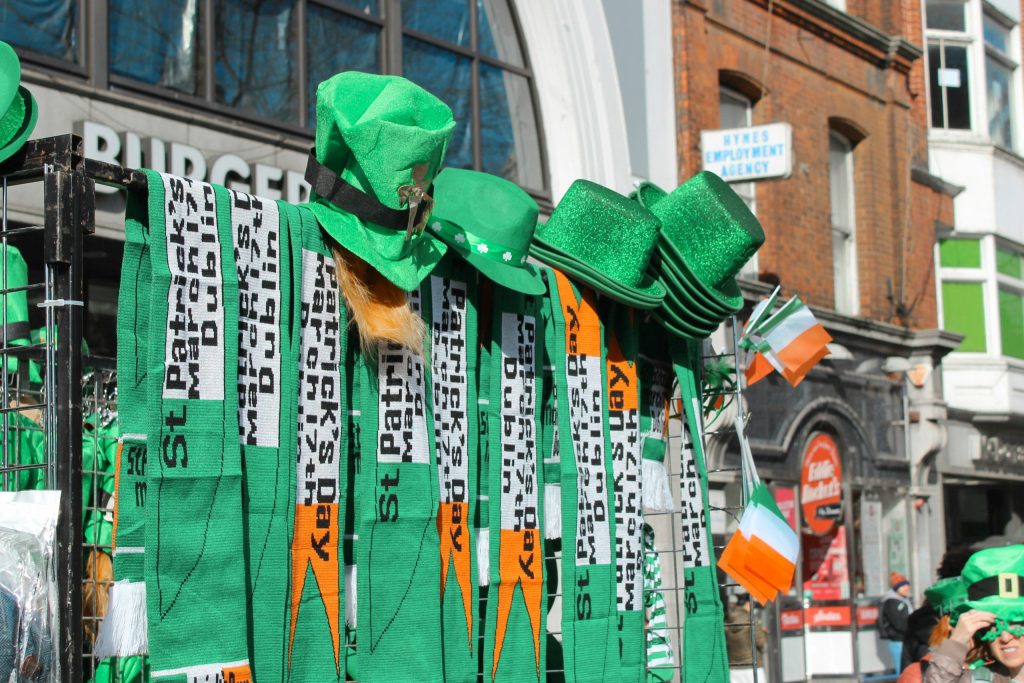
Symbols further reinforce this sense of unity. Iconic elements associated with Saint Patrick’s Day—such as the shamrock and the widespread use of green—act as visual markers of shared identity. Even among people with no direct Irish heritage, these symbols create a temporary but powerful sense of belonging.
Celebrations such as Saint Patrick’s Day demonstrate how collective rituals promote social cohesion through cultural symbolism, shared emotions, and psychological mechanisms. By bringing people together in public spaces to celebrate common traditions, these events highlight a fundamental feature of human societies: the need to create community through collective experience.

Predoctoral researcher at the Department of Sociology in University of Barcelona.