

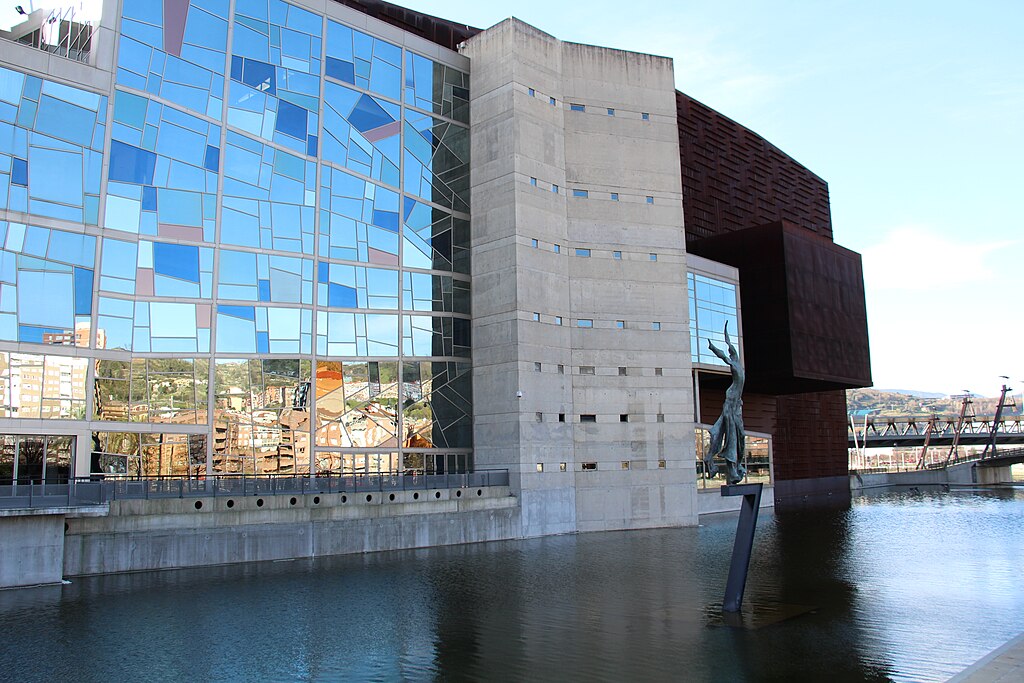
This wonderful current venue of the Opera does not only not invisibilise but it enhances the life that many and very diverse people had in that place. Its name, Euskalduna, is the one of the shipyards where great vessels where built since 1900 to 1988. The different elements of its architecture represent, by the water, a ship being constructed. Controversies are frequent, between those who admire the past and become sad facing the future and those who are thrilled with a future that turns its back on the past creating, in this way, a rift between different generations and, what is worse, between people of different ages from the same families and communities. The Euskalduna palace unites all in one shared memory and a dream of a future.
Many of the people that go to the Opera nowadays, or participate in excellent congresses that take place there, have in their families people who worked in those shipyards that were a symbol of a Basque Country that maintained its local rural tradition at the same time that it projected itself internationally as a great industrial power. When the shipyards fell into crisis, there were workers already unemployed or retired that continued walking every day until they could see the place where they had lived so many situations. Little by little, they saw that that past did not end but it was transformed in a future that gave hope for the lives of their grandchildren. There are other people that also go to the Opera and take part in congresses there that if they get to know about this past which is present in the building they enjoy today, live even more intense emotions in that precious place. The palace can be reached from the Euskalduna bridge over the estuary, or the famous park of Doña Casilda where almost all children of Bilbao from the 20th and 21st centuries have enjoyed great moments. Doña Casilda is the woman to whom we owe emblematic places from Bilbao such as the city’s Civil Hospital, Deusto University, the Bilbao Choral Society, Arriaga theater, among others. She also developed projects that improved the lives of the most vulnerable ones, including schools for low socioeconomic sectors and homes for elderly people. Her contributions to transforming Bilbao, as well as diverse participants’ knowledge (or lack thereof) of them, are analyzed in this scientific article.

PhD from the University of Wisconsin-Madison, in the best school of education in the world