

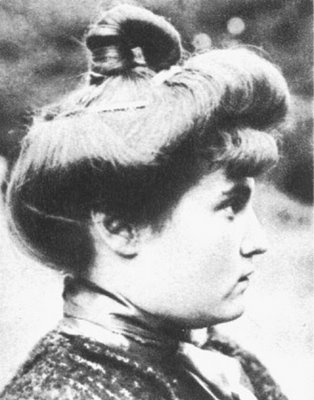
Misia Sert, born Marie Sophie Olga Zénaïde Godebska in 1872, emerged as one of the most influential cultural figures in early twentieth‑century Paris, shaping the visual arts, music, ballet, and indirectly, opera. A gifted pianist trained under Gabriel Fauré, Sert moved effortlessly between the worlds of performance and patronage, becoming both muse and catalyst for many of the era’s most significant creative minds.
Her contributions to the visual arts were profound. Through her marriage to Thadée Natanson, founder of La Revue Blanche, Sert became central to a circle of avant‑garde artists and composers including Pierre Bonnard, Édouard Vuillard, Maurice Ravel, Claude Debussy, and Henri de Toulouse-Lautrec. These artists immortalized her in numerous paintings and posters, not merely as a symbolic muse but as an active commissioner of artwork. Her homes became showcases for contemporary art, filled with decorative panels and commissions from Bonnard and Vuillard. She supported artists financially and socially, hosting gatherings that fostered collaboration within the Belle Époque avant‑garde.
Sert’s most enduring impact on performance arts, and her closest link to opera, stemmed from her long association with Serge Diaghilev and the Ballets Russes. Introduced through her third husband, José‑María Sert, she became one of Diaghilev’s most devoted patrons. Her financial backing, artistic insight, and extensive social network were crucial to the company’s groundbreaking productions. Although the Ballets Russes focused on ballet, their work profoundly influenced modern opera through innovations in staging, music, and design. Sert helped facilitate collaborations between composers, choreographers, and visual artists, contributing to a new interdisciplinary approach that reshaped European performance culture.
Her introduction of Coco Chanel to Diaghilev further expanded this legacy, supporting cross‑disciplinary experimentation in costume and production design. Through her patronage, social influence, and artistic intuition, Misia Sert played a pivotal role in the evolution of modern art and performance, leaving an indelible imprint on both the visual and operatic spheres.
Reference
- Casini, Giovanni, “Misia Sert (born Marie Sophie Olga Zénaïde Godebska),” The Modern Art Index Project (August 2021), Leonard A. Lauder Research Center for Modern Art, The Metropolitan Museum of Art. https://doi.org/10.57011/ZIAT1170

Serra Húnter Fellow of Sociology at Universitat Rovira i Virgili.
Former DAAD-Gastprofessorin at Julius-Maximilians-Universität Würzburg