

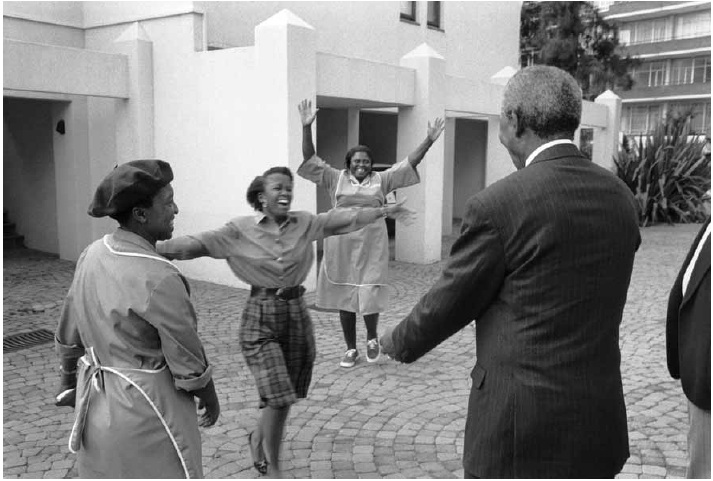
The elections held in late April 1994 in South Africa marked a decisive turning point in the country’s history, representing not only the formal end of Apartheid but also the culmination of a long and complex transition toward democracy. While April 27 is widely commemorated as the central symbolic date, the electoral process itself extended over several days, from April 26 to April 29, reflecting both logistical challenges and the unprecedented scale of participation.
As Roger Southall (1994) argues, these elections should be understood as “one of those rare historical moments when humankind made a significant step forward”. Their importance lies not only in the act of voting, but in the peaceful culmination of a liberation struggle that many had feared would end in widespread violence. Instead, the elections represented what Southall describes as a triumph for the democratic ideal and the decisive defeat of racism as a system of government.
The road to April 1994 had been long and uncertain. The transition began in 1990 with the legalization of previously banned political movements such as the African National Congress, and continued through years of negotiations marked by political violence, institutional resistance, and deep social divisions. These negotiations aimed to reconcile majority rule with the protection of minority rights, ultimately producing an interim constitutional framework that made democratic elections possible .
The elections themselves were remarkable not only for their inclusiveness but also for their resilience in the face of difficulties. Millions of South Africans voted for the first time, often waiting in long queues despite administrative problems and fears of violence. The process had to be extended in some areas due to delays and logistical constraints, highlighting the extraordinary nature of the moment.
The victory of the ANC and the election of Nelson Mandela symbolised the transition from a system of racial exclusion to one of political inclusion. In this sense, April 1994 represents more than a historic vote: it marks the beginning of a new South Africa, oriented towards equality, participation, and reconciliation.
Reference
- Southall, R. (1994). The South African Elections of 1994: The Remaking of a Dominant-Party State The Journal of Modern African Studies , Vol. 32, No. 4 (Dec., 1994), pp. 629-655

Associate Professor in the Department of Sociology at the University of Barcelona