

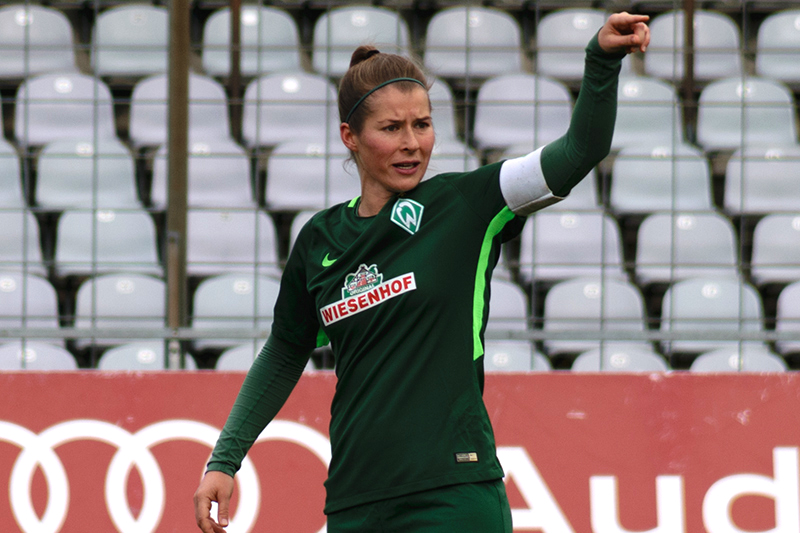
European football has witnessed a landmark moment with the appointment of Marie-Louise Eta as interim head coach of Union Berlin, making her the first woman to lead a men’s team in one of Europe’s five major leagues: the Premier League, LaLiga, Serie A, Ligue 1, and the Bundesliga. While the immediate focus is on the sporting decision, the broader significance goes far beyond a single club or result. It represents a symbolic breakthrough in a sport long shaped by entrenched gender hierarchies.
Eta’s rise is not accidental, but the outcome of years of gradual progress for women in football. Over the past decades, women have increasingly entered spaces once considered inaccessible: coaching staff roles in men’s professional teams, scouting departments, and executive positions within elite clubs. Each step has chipped away at a system that, for a long time, limited leadership opportunities to men. Yet, despite these advances, the role of head coach at the highest level of men’s football remained one of the most visible and resistant “glass ceilings.”
Her appointment at Union Berlin comes in a context of urgency rather than long-term planning, as the club searches for stability during a challenging phase of the season. Eta, who has already made history as part of the coaching staff and previously took charge of a Bundesliga match in an interim capacity, represents both continuity and disruption: continuity in her professional development within the club, and disruption in long-standing norms about who is seen as “fit” to lead a men’s elite team. This moment becomes specially powerful as a reference point for young female athletes and aspiring coaches, who can now see a real example of progression into spaces once considered unreachable.
However, this milestone should not be mistaken for a destination. The presence of women in top-tier men’s coaching remains extremely rare, and structural barriers persist, including limited hiring pipelines, unconscious bias, and a lack of sustained opportunities after interim roles. Real equality in football will not be defined by isolated breakthroughs, but by normalization, that is when such appointments are no longer seen as exceptional.
Still, the symbolic weight of this moment is undeniable. Football has always reflected broader social change, and Eta’s appointment signals that the boundaries of possibility are expanding. Every glass ceiling broken not only reshapes the present but also widens the path for those who follow.

Predoctoral researcher at the Department of Sociology in University of Barcelona.