

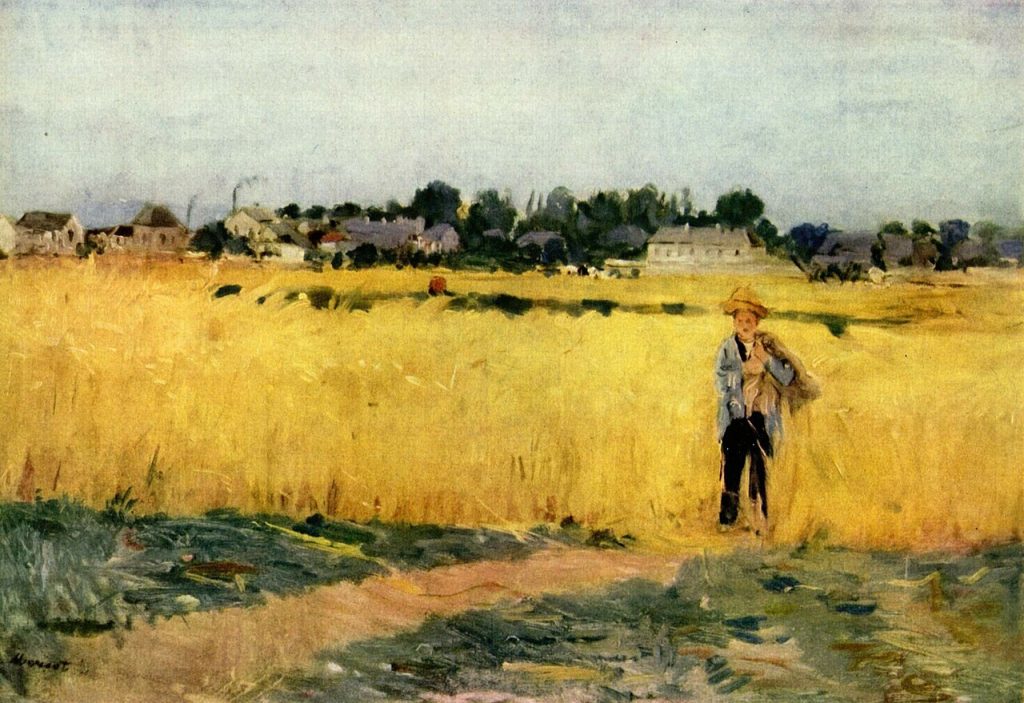
The story of the Morisot sisters, Berthe and Edma, is a striking example of how women shaped the course of modern art, even while constrained by the gender norms of nineteenth century France. Raised in a cultivated bourgeois family, both sisters received private painting lessons, an opportunity unavailable to most women of their time. Their tutor quickly recognized the intensity of their talent and warned their parents that art might come to rule their destinies. His intuition proved right: by their early twenties, both Berthe and Edma had works accepted into the prestigious Salon de Paris.
Their early training under Camille Corot introduced them to painting in the open air and to capturing life through luminous colour and atmosphere. Yet while Edma withdrew from art after marriage, Berthe stepped into the emerging avant garde, becoming one of the most daring innovators of Impressionism.
Berthe Morisot’s contribution to Impressionism is often understated, but she transformed the movement from within. During the early 1870s, particularly while living with her sister during the Franco Prussian War, she developed a bold and experimental technique that none of her male colleagues had attempted. Her quick and broken strokes, scratched surfaces, and shimmering light effects pushed Impressionism toward greater immediacy and emotional presence. Far from imitating the style of Edouard Manet, with whom she formed a lifelong artistic dialogue, Morisot created a distinctly personal approach rooted in sensitivity, speed, and the close observation of domestic and intimate spaces.
Restricted by her gender to painting interiors, gardens, and scenes of family life, Morisot turned these limitations into a new artistic language. Her portraits of her husband Eugene Manet and their daughter Julie reveal how she elevated everyday moments into vibrant explorations of light and presence.
Despite playing a central role in almost every Impressionist exhibition and even outselling Monet, Sisley, and Pissarro at times, Berthe Morisot was long dismissed as a painter of the feminine sphere. Recovering her legacy is essential not only for gender equity but also for a more accurate understanding of Impressionism itself.

Serra Húnter Fellow of Sociology at Universitat Rovira i Virgili.
Former DAAD-Gastprofessorin at Julius-Maximilians-Universität Würzburg