

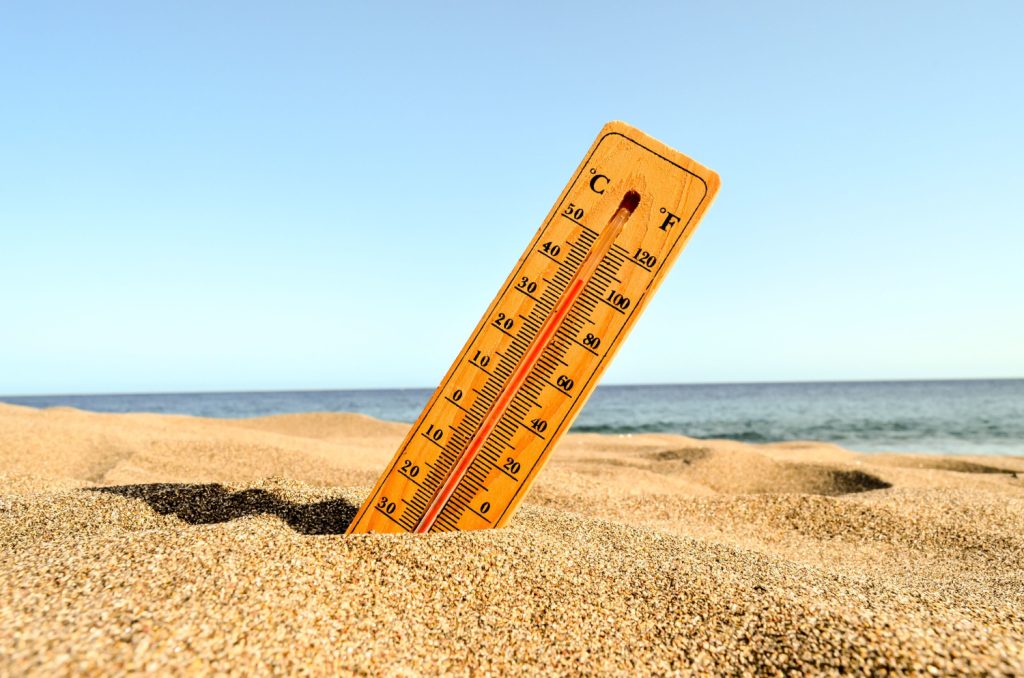
In recent weeks, countries across the globe have been experiencing extreme and unprecedented heat. According to recent data collected by the European Commissions’s Copernicus service, the month of July was Earth’s third hottest on record. In Europe, repeated and intense heatwaves are affecting both southern and central regions. Similarly, parts of Africa, the United States, and Australia are also reporting extreme temperatures which oftentimes come with growing concerns about the environmental and health consequences of prolonged heat exposure.
As the impacts of these events become more visible—affecting public health, water resources, ecosystems, and infrastructure—proenvironmental actions arise and the awareness and motivation to do something about it increase among the general public. This moment of heightened awareness is an important opportunity to recall what the scientific evidence available is informing about the actions that can make a real difference. Importantly, this shows, that citizen involvement in environmental monitoring and projects not only contributes valuable data but also deepens commitment to environmental stewardship.
Co-creation of solutions—where communities, scientists, and policy-makers work together—has emerged as a powerful approach. This model recognizes that decisions about climate resilience, land use, water management, or energy transitions must reflect not just data, but lived realities. It allows citizens to be active participants in building the future, rather than passive recipients of top-down policies. More than simply acting as observers, citizens play a crucial role in shaping meaningful, place-based responses to climate challenges. Studies highlight the effectiveness of initiatives that integrate public knowledge with expert perspectives. Local communities often hold critical insights into the specific vulnerabilities and strengths of their environments, and when this experiential knowledge is combined with scientific evidence, the results are more nuanced, contextually appropriate, and sustainable.
Recent scientific reviews document that citizen science has “gained tremendous popularity” over the past two decades, enabling large-scale data collection across marine and terrestrial ecosystems—from invasive species to water quality and climate change impacts. Several environmental preservation programs across the globe are demonstrating the power of citizen involvement in environmental monitoring. To name a few, in Australia, the Great Reef Census invites everyday divers, snorkelers, and tourists to photograph coral reefs and upload images to an open database used by marine scientists to assess the health of the Great Barrier Reef. In Indonesia, citizens and youth in the Bunaken-Tangkoko-Minahasa Biosphere Reserve have taken part in ecosystem mapping using digital tools, helping scientists understand and track ecosystem services and climate impacts, even during the pandemic. Meanwhile, in Brazil, Indigenous communities supported by the Amazon Conservation Team have been trained in GPS mapping and satellite monitoring to track deforestation and protect biodiversity, combining traditional ecological knowledge with modern technology. These initiatives reflect a shift toward co-creation in environmental science, where monitoring is not only scientific but also democratic and community-driven. These and other experiences are proof that although the challenges posed by climate change are undeniably global, the solutions do often start at the local level—with informed, empowered citizens who are ready to act.

Associate Professor in the Department of Sociology at the University of Barcelona