

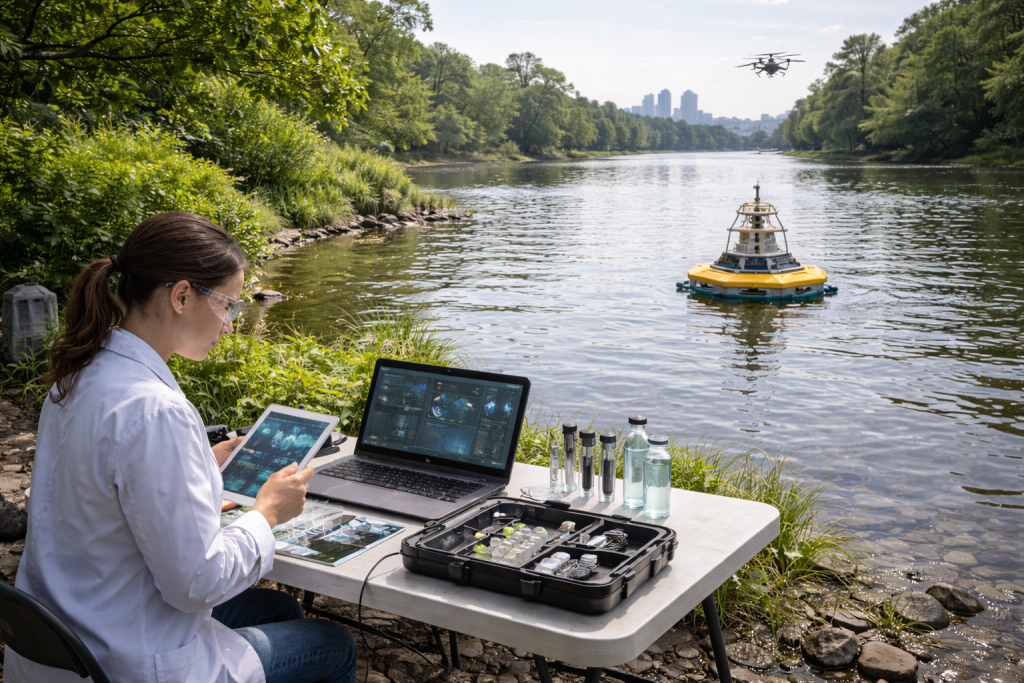
Water is essential for life, but rivers, lakes, and oceans are increasingly threatened by aquatic biocontaminants. These include harmful bacteria, viruses, parasites, toxic algae, and antibiotic resistance genes. Unlike chemical pollution, these biological contaminants can grow, spread, and change quickly. This makes them difficult to detect and control using traditional monitoring methods.
A recent scientific review published in Biocontaminant explains how artificial intelligence (AI) is changing the way scientists manage these risks. Instead of reacting after pollution has already caused damage, AI allows a proactive approach, offering early warnings and better prevention strategies.
One major contribution of AI is smart monitoring. AI-powered sensors and automated detection systems can identify harmful microorganisms directly in the water, often in real time. These systems combine advanced sensors with machine learning and deep learning models. As a result, they are faster and more accurate than traditional laboratory testing, which can take days or even weeks.
AI also improves forecasting, meaning it can predict future contamination events. By analyzing large amounts of data—such as water temperature, rainfall, nutrient levels, and past pollution events—AI models can forecast when and where problems like harmful algal blooms may occur. This gives authorities time to take action before ecosystems or human health are affected.
Another important area discussed in the review is source attribution. This means identifying where the contamination comes from, such as wastewater, agriculture, or natural sources. The study highlights the use of explainable AI, which not only gives predictions but also explains how those predictions were made. This helps scientists understand pollution pathways and calculate how much each source contributes to the problem.
Despite these benefits, the review also points out several challenges. AI systems need large, high-quality datasets, which are not always available. Some AI models are difficult to interpret, and integrating AI with ecological knowledge remains complex. The authors suggest future research should focus on self-learning AI systems, better data sharing, and stronger links between AI and environmental science.
Overall, the review shows that AI has great potential to become an early warning network for water systems, helping protect ecosystems and public health. With continued development, AI-driven tools could play a key role in managing water quality in a changing world.

Editor of Daily 27.
Predoctoral researcher at the Department of Sociology in University of Barcelona.