

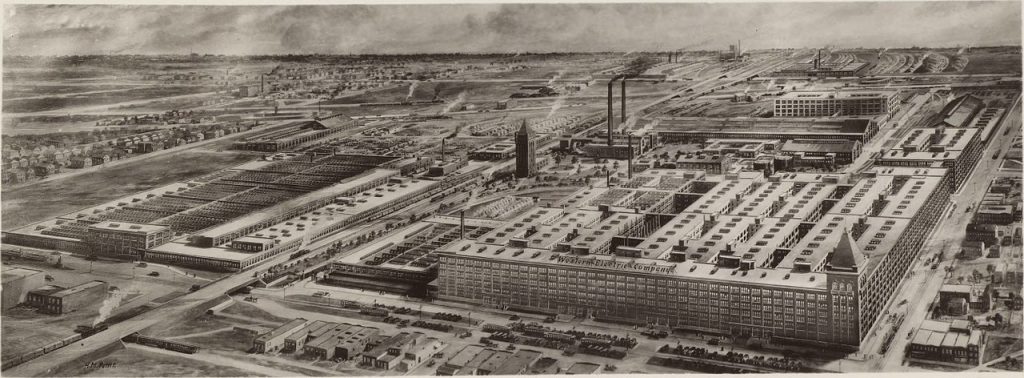
In the late 1920s, a series of studies at the Hawthorne Works factory, near Chicago, would quietly transform how we understand productivity at work. Led by researchers including Elton Mayo, these experiments initially aimed to measure how changes in lighting affected workers’ output.
The logic seemed straightforward: better lighting should lead to higher productivity. Researchers increased the illumination in the workspace, and productivity improved. But when they dimmed the lights, something unexpected happened: productivity still increased. Even more surprising, productivity continued to rise regardless of whether conditions improved or worsened.
What was going on? Mayo and his colleagues began to realize that the physical environment was only part of the story. The key factor was social. Workers knew they were being observed, and this attention made them feel valued and important. As a result, they became more motivated and engaged in their work. This phenomenon later became known as the “Hawthorne effect.”
But the insights went deeper. The experiments revealed that informal relationships, group dynamics, and a sense of belonging played a crucial role in shaping behavior at work. Employees were not just individuals responding to physical conditions; they were members of social groups whose interactions influenced their performance.
This marked a turning point in management thinking. Until then, productivity had largely been viewed through a mechanical lens, focused on efficiency, tools, and physical conditions. The Hawthorne studies introduced a new perspective: that human emotions, relationships, and social context matter just as much, if not more.
Today, this idea lies at the heart of human resource management. From team building to employee engagement, the legacy of Hawthorne reminds us that workplaces are not just systems, they are communities.

Serra Húnter Fellow of Sociology at Universitat Rovira i Virgili.
Former DAAD-Gastprofessorin at Julius-Maximilians-Universität Würzburg