

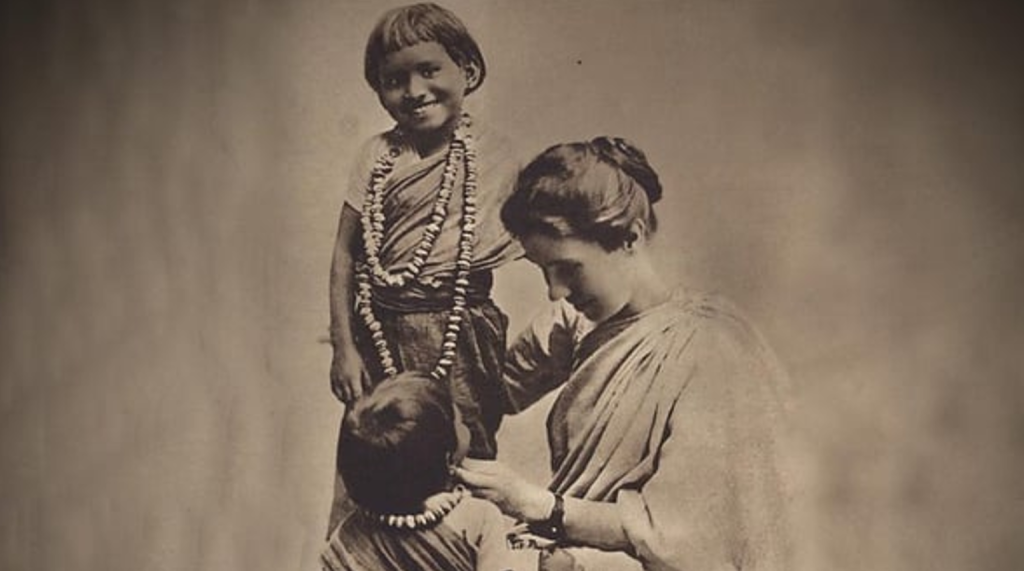
Amy Carmichael (1867–1951) was a prominent figure in missionary and social work whose life was marked by a deep sense of calling to serve others. From her youth in Belfast, she showed an exceptional commitment to religious and social causes. As a teenager, she organized classes for young women working in textile factories, known as “mill girls,” providing them with education and spiritual support in a context of harsh working conditions and limited opportunities.
Despite suffering from health problems throughout her life, Carmichael did not allow this to limit her mission. She moved to southern India, where she founded a Christian community in Dohnavur. This place became a safe refuge for hundreds of vulnerable children, many of whom had been abandoned or were at risk of exploitation. There, they received not only protection but also education, moral guidance, and a family-like environment.
One of the most significant aspects of her work was her commitment to eradicating the devadasi system. These girls were dedicated to temples under a religious pretext, but in practice were forced into lives of exploitation and prostitution. Carmichael actively denounced this reality, confronting both deeply rooted cultural structures and social indifference.
Her work not only had an immediate impact on the lives she helped save, but also contributed to broader social change. Thanks to the efforts of reformers and activists like her, the practice was eventually banned in 1947 by the state of Madras.
Amy Carmichael’s legacy endures as an example of courage, compassion, and perseverance, demonstrating how a single person can bring about profound and lasting change.

Predoctoral researcher at the Department of Sociology in University of Barcelona.