

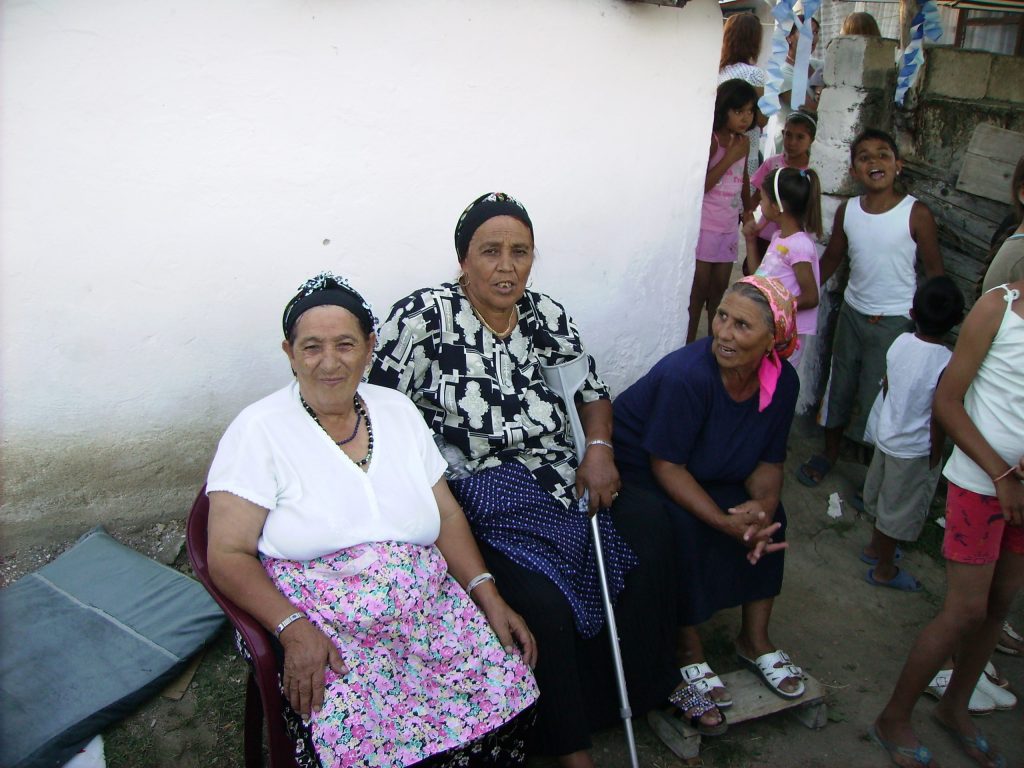
International Roma Day
A 2025 study published in Frontiers in Public Health explores how Dialogic Scientific Gatherings can improve health knowledge and participation among Roma women with little or no formal education. This group often faces health inequalities due to social exclusion, limited access to healthcare, and fewer educational opportunities.
Roma communities across Europe are more likely to experience poor health outcomes. Traditional ways of sharing health information, such as lectures or written materials, do not always reach everyone effectively. The study suggests that more inclusive and interactive methods are needed.
The researchers worked with a Roma women’s association as part of the ROM21 project, funded by the Spanish State Programme for Research, Development and Innovation Oriented towards the Challenges of Society. They organised four dialogic scientific gatherings, where participants met to discuss scientific information together. In these sessions, the women read informative versions of research articles and talked about them openly. Importantly, they chose the health topics themselves, which made the dialogues more relevant to their lives.
Unlike traditional teaching, dialogic scientific gatherings are based on egalitarian dialogue. Every participant is encouraged to share their thoughts, experiences, and questions. There is no hierarchy between “experts” and “learners.” This creates a respectful and supportive environment where everyone feels comfortable participating.
The study found that this approach helped the Roma women better understand health-related information. Topics included the link between diet, physical activity, and diseases such as cancer and childhood obesity. The gatherings also explored how social relationships can influence mental health. By discussing these issues together, participants were able to connect scientific knowledge to their everyday experiences.
An important finding was that the women were highly engaged and interested in learning. This challenges common stereotypes that non-academic Roma women are not interested in science or health information. In fact, when the information was shared in an accessible and respectful way, the participants were eager to take part.
The gatherings also led to a sense of empowerment. The women gained confidence in understanding health information and making informed decisions. This knowledge can benefit not only themselves but also their families and wider communities.
In conclusion, the study shows that dialogic scientific gatherings are an effective way to promote inclusive health participation and communication among non-academic Roma women. By focusing on dialogue, participation, and respect, this approach can help reduce health inequalities and support people in making healthier choices.
Reference
- Munté-Pascual A, Ruiz-Eugenio L and López de Aguileta A (2025) Dialogic scientific gatherings: promoting inclusive health participation and communication among non-academic Roma women. Front. Public Health 13:1618150. doi: 10.3389/fpubh.2025.1618150

Predoctoral researcher at the Department of Sociology in University of Barcelona.