

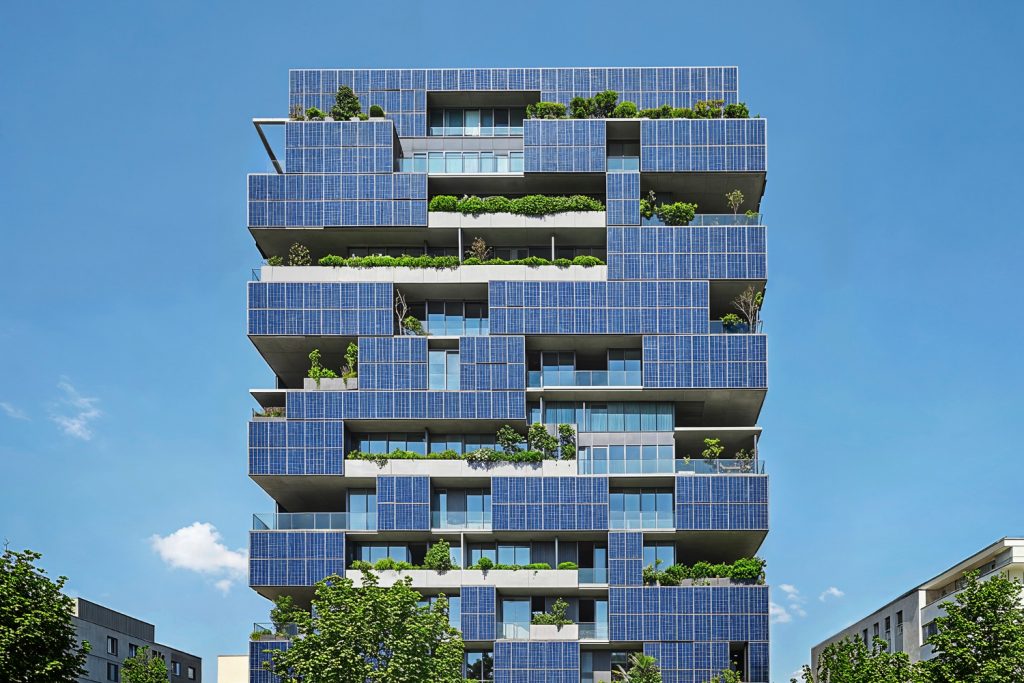
A recent study published in Nature Climate Change explores how adding solar panels to the outside walls of buildings could help fight climate change while also making cities more comfortable to live in. This technology is called façade-integrated photovoltaics (FIPV).
Traditionally, solar panels are placed on rooftops. However, this study highlights that the vertical surfaces of buildings, such as walls, are a largely unused resource. Researchers created a global model using data on building shapes, climate conditions, and sunlight exposure to estimate how much energy these wall-mounted solar panels could produce.
The study estimates that FIPV systems could generate around 732 terawatt-hours (TWh) of electricity per year worldwide. This is a significant amount of clean energy, enough to make a noticeable contribution to global electricity supply. But the benefits go beyond electricity generation. These panels also help cool buildings by shading walls and reducing how much heat enters indoors. As a result, buildings need less air conditioning. On average, the study found that FIPV could reduce building electricity demand by about 8.1%.
This combination of producing energy and reducing energy use makes the technology especially valuable. Even though installing façade solar panels can be more expensive than traditional rooftop systems, the study found that over 80% of urban areas would save money over time due to lower energy bills. The environmental impact is also significant. If widely adopted by 2050, FIPV could reduce global carbon dioxide emissions by up to 37.7 billion tonnes (GtCO₂). This could help avoid about 0.05°C of global warming, which is meaningful when trying to limit climate change.
Overall, the study shows that building façades are an untapped opportunity for clean energy and climate adaptation. By turning walls into energy-producing surfaces, cities could become more sustainable and resilient to rising temperatures. However, the researchers also note that successful implementation will require supportive policies and careful planning, as costs and benefits can vary depending on location and building design.

Editor of Daily 27.
Predoctoral researcher at the Department of Sociology in University of Barcelona.