

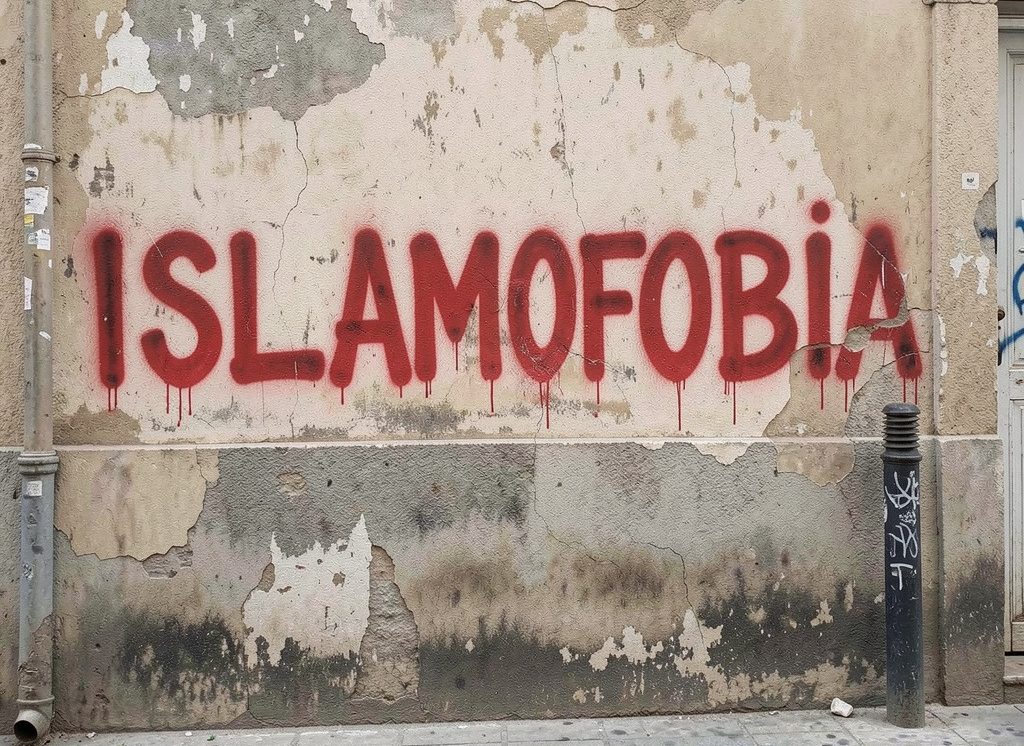
International Day to Combat Islamophobia
Every March 15, the International Day to Combat Islamophobia is commemorated, a date recognized by the United Nations that seeks to highlight a global phenomenon affecting millions of people. Beyond its symbolic nature, this day invites reflection on how Islamophobia continues to be a challenge for coexistence in increasingly diverse societies.
But what exactly do we mean by Islamophobia? The term describes attitudes of rejection, fear, or discrimination toward Islam and Muslim people. Sometimes it appears in everyday experiences—such as distrustful looks, stereotypical comments, or unequal treatment—but it can also emerge in broader areas of social life. For example, in certain laws, political speeches, or media representations that contribute to reinforcing prejudice, stereotypes, and even hostile attitudes. In some cases, these dynamics are presented as neutral measures or technical decisions, although in practice they may have unequal effects on certain social groups.
Moreover, these attitudes are not directed only at religious beliefs but also at visible signs associated with Islam, such as certain forms of clothing. For this reason, Muslim women who wear garments such as the hijab or the niqab are often among the groups most exposed to prejudice and discrimination. In different European countries, the use of these garments has generated public debate and, in some cases, legal restrictions linked to the idea of state neutrality or secularism. These debates are often presented as attempts to “liberate” or “protect” these women, without taking into account the diversity of their own voices and experiences.
Many of these dynamics are fueled by lack of knowledge, fear, misinformation, and hate speech circulating in society, which tend to simplify and polarize a reality that is far more diverse. In this context, dialogue becomes essential to better understand that diversity. Encouraging spaces for interaction free from violence—based on trust, tolerance, and cooperation—in schools, workplaces, or local neighborhoods helps strengthen mutual understanding among people from different backgrounds.
When people get to know one another and share experiences, stereotypes lose strength and diversity can be perceived as a source of enrichment and mutual learning. Likewise, critical thinking is fundamental: learning to verify sources, identify misinformation, and question generalizations helps curb disinformation and hate speech, and supports active opposition to intolerance and xenophobia.
In this sense, building coexistence based on respect and recognition of diversity does not happen automatically: it requires collective commitment as well as small gestures in everyday life. As the well-known proverb reminds us, “many small people, in small places, doing small things, can change the world.” May the International Day to Combat Islamophobia be more than just a reminder—an opportunity to promote real change.

Criminologist and Intercultural Mediator