

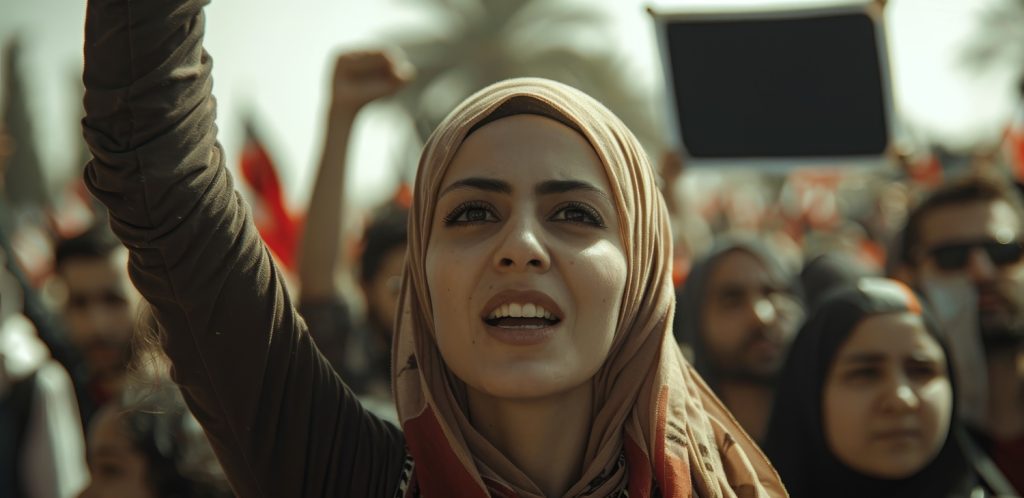
The nationwide protests in Iran that escalated in late 2025 and continued into 2026 have produced not only immediate political and humanitarian crises but also a profound, wide-ranging burden on mental health across the population. Credible reporting indicates extremely large numbers of fatalities and extensive state-led repression; these concrete harms—in combination with prolonged uncertainty, visible violence, and mass bereavement—create fertile ground for population-level psychiatric morbidity, including anxiety, depression, post-traumatic stress, complicated grief, and increases in suicide risk.
Direct exposure to violence is an obvious pathway to enduring psychological injury. Investigations of recent protest campaigns in Iran describe a pattern of targeted, often brutal force against demonstrators that has produced severe physical injuries and deaths; medical and forensic testimony has documented systematic concealment and mass burials in some localities, compounding both the physical and symbolic trauma for families and communities. For survivors and witnesses, these events commonly produce intrusive re-experiencing symptoms, hypervigilance, nightmares, avoidance, and functional impairment consistent with post-traumatic stress disorder (PTSD). The combination of visible bodily harm, public spectacle, and continuing risk of state retaliation means a psychological threat that is both acute and chronic.
Exposure need not be direct to cause harm. Research from Iran and comparable contexts demonstrates that participation in, or even sustained exposure to, protest-related media (including graphic images and accounts of killings or disappearances) increases anxiety, depressive symptoms, and feelings of helplessness across demographic groups. A focused study of Iranian protestors and injured civilians documented substantial levels of distress, and other systematic reviews of unrest in diverse countries find consistent rises in depressive symptoms, PTSD, and generalized anxiety among broad segments of the population during and after episodes of political violence. These effects often extend beyond the cohorts who directly participated in demonstrations to include family members, children, health workers, journalists, and bystanders.
The mental-health impact is amplified by cumulative and interacting stressors: loss of loved ones, the disappearance of relatives, economic disruption (job loss, inflation, interrupted livelihoods), displacement, and the breakdown of routine social supports. In communities facing mass casualties and secrecy around deaths and burials, grief becomes complicated—families may be unable to hold funerals or obtain closure—intensifying prolonged grief disorder and increasing the risk for depressive and suicidal outcomes. Furthermore, societal fracture and political polarization erode communal coping resources and trust in institutions, limiting both informal and formal pathways to recovery.
Children and adolescents are a particularly vulnerable group. Developmental neuroscience and public-health research indicate that exposure to community violence during formative years can produce long-term alterations in stress physiology and emotional regulation, with downstream effects on academic performance, social relationships, and lifetime mental-health trajectories. Even when not physically harmed, young people subjected to chronic fear, school closures, and the loss of caregivers face heightened odds of anxiety disorders, behavioral problems, and learning difficulties—consequences that can perpetuate social disadvantage and intergenerational harm.
Barriers to mental-health care worsen the situation. Stigma, fear of surveillance, restricted access to services, shortages of trained clinicians, and disrupted health infrastructure reduce help-seeking at precisely the moment when demand rises. For many Iranians the choice is stark: remain isolated with escalating symptoms, or seek care in contexts where provision is limited and the act of seeking support may carry personal or political risk. These constraints transform treatable distress into chronic disorders, increasing the future burden on families and on public health systems.
The aggregate effect of these mechanisms is not only an increase in individual suffering but measurable public-health consequences: higher prevalence of depressive and anxiety disorders, increased PTSD and substance misuse, impairment in workforce participation, and reduced civic and social functioning. Evidence from multiple country settings shows that the mental-health footprint of violent unrest can remain visible for years unless actively addressed through large-scale, accessible, and culturally appropriate interventions.
A sober appraisal of the 2026 protests therefore requires attention to these psychological harms alongside the political and humanitarian statistics. Failing to acknowledge, document, and respond to mental-health consequences risks converting acute trauma into chronic societal injury. For the medical and public-health communities, policy makers, media, and civil society actors, the imperative is clear: prioritize safe, confidential, and widely accessible mental-health supports; protect health-care workers and mental-health professionals who provide them; and preserve avenues for collective mourning and truth-seeking that are essential to healing at both familial and societal levels. The human cost of political violence is counted not only in the immediate tally of deaths and injuries but in the silent, pervasive burdens that will shape Iranian lives and social fabric long after headlines fade.

Assistant Professor at the University of Social Welfare and Rehabilitation Sciences in Tehran, Iran. He earned his Ph.D. in Gerontology with honors in 2017, following his Bachelor's and Master's degrees in Rehabilitation Sciences. Dr. Rashedi is an esteemed member of several prestigious organizations, including the Gerontological Society of America (GSA), the International Society to Advance Alzheimer's Research and Treatment (ISTAART), and the American Psychological Association (APA). His research primarily focuses on mental health and psychogeriatrics. Since 2019, Dr. Rashedi has been a Senior Collaborator for the Global Burden of Disease (GBD) at the Institute for Health Metrics Evaluation (IHME) at the University of Washington in the United States.