

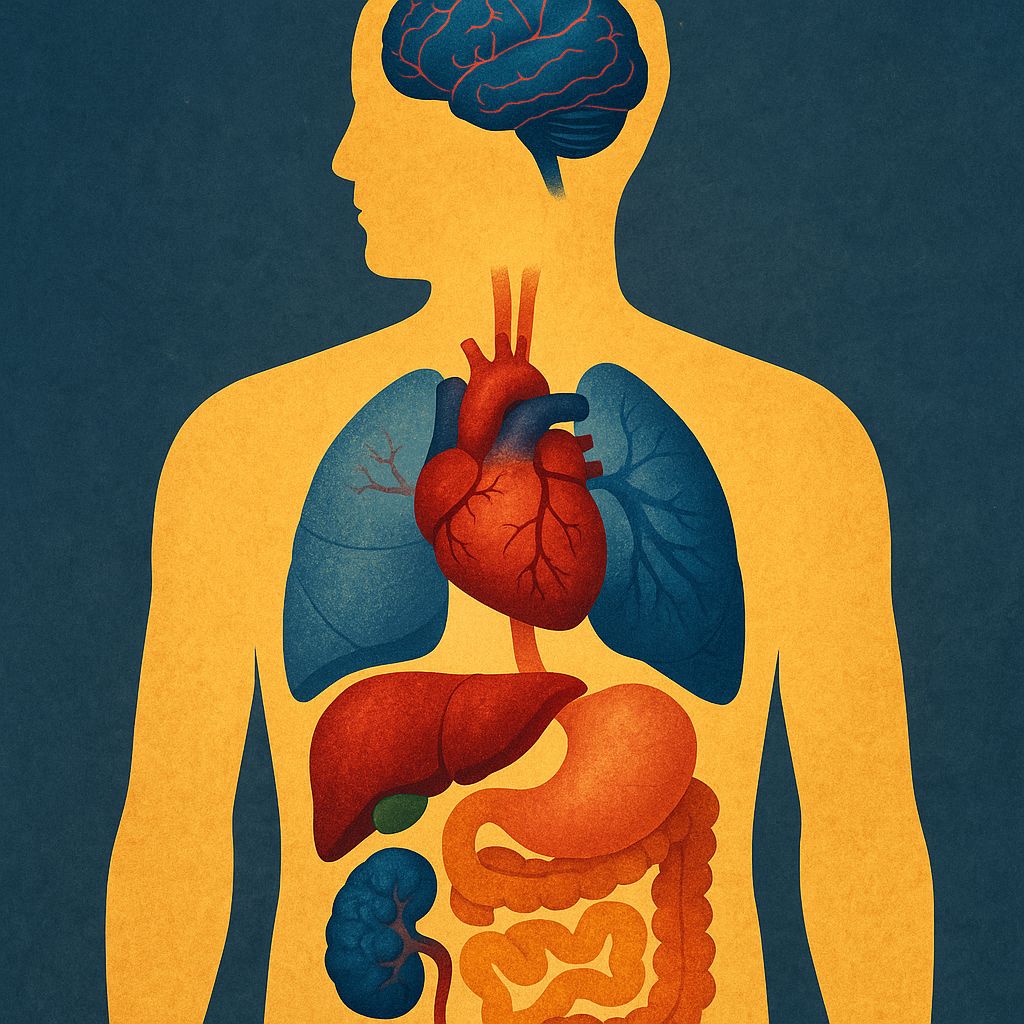
A study of nearly 45,000 people suggests that each organ in the body runs on its own aging clock — and some of those clocks can predict our future health better than others.
The research, published in Nature Medicine and covered by ScienceNews, used blood-based proteomics to estimate the “biological age” of 11 organs, including the brain, heart and immune system. These organ-specific ages predicted the risk of developing chronic diseases years before diagnosis — and even life expectancy.
One finding stood out: a biologically “aged” brain tripled the risk of Alzheimer’s disease, while a “youthful” brain reduced it by about 74%. The effect was as strong as carrying key genetic risk or protective factors for Alzheimer’s disease. “A youthful brain and immune system were uniquely associated with longevity,” the authors write, highlighting these organs as potential levers for extending healthspan.
The study also found that aging is cumulative. People with five to seven aged organs were 4.5 times more likely to die within 17 years; eight or more raised that risk eightfold. But the reverse was true for those with youthful organs: participants with both a young-looking brain and immune system had their mortality risk cut by more than half.
Crucially, the research suggests these biological ages are not fixed. Lifestyle made a difference: regular, high-intensity activities such as running or aerobics and diets rich in oily fish were linked to younger organ profiles, while smoking, heavy alcohol use and processed meat accelerated aging across multiple systems. These patterns point to a future in which we could monitor organ-specific aging through a simple blood test and intervene early with lifestyle, medication or regenerative therapies.
If validated and translated into clinical practice, this approach could transform medicine from treating age-related diseases late to actively maintaining organ youth throughout life. As the authors note, the data “lay the foundation for human experiments testing the effects of novel longevity interventions on the biological age of organs at the individual level”.

Coordinator at la Verneda-Sant Martí Learning Community and adjunct professor at the University of Barcelona