

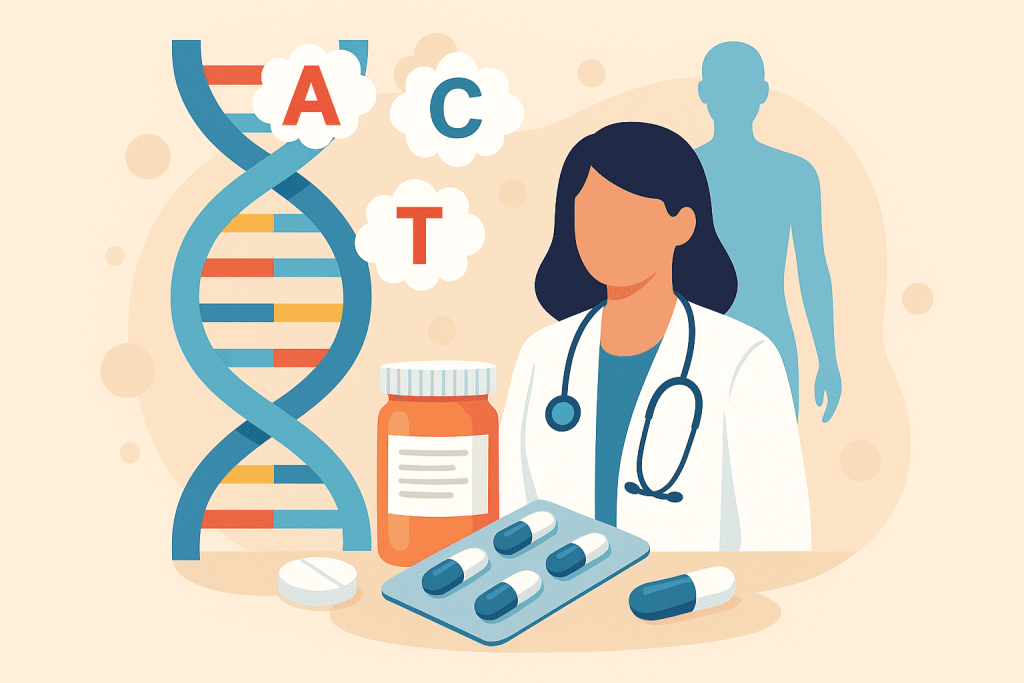
For decades, medicine has followed a standardized approach, based on averages. Treatments are prescribed according to population studies, assuming that what works for most of the people will work for everyone. However, this model overlooks a crucial factor: genetic variability, which plays a key role in how we respond to medications.
Pharmacogenetics is the field that studies how genetic variations affect the safety and response to drugs. In particular, it mostly focuses on polymorphisms in genes coding for drug-metabolizing enzymes, transporters, and receptors. These genetic variations might help to predict whether a patient will have a normal, reduced, or even a toxic response to a medication. A common example is the CYP2D6 gene, which is involved in the metabolism of many drugs. People carrying CYP2D6 genetic variants that reduce or eliminate the enzymatic function (known as poor metabolizers) can accumulate harmful drug levels. On the contrary, others CYP2D6 genetic variants confer an ultra-rapid metabolizer profile, which may process the drug too fast, making it ineffective. This information might be obtained through a genetic test using the qPCR technique, allowing doctors to adjust the dose or choose an alternative drug before starting treatment and thus reduce the risk of adverse reactions.
The clinical value of pharmacogenetics is well supported. Recent studies estimate that 30% to 40% of serious drug side effects may have a genetic cause. Regulatory agencies such as the FDA (Food and Drug Administration) and AEMPS (Spanish Agency for Medicines and Health Products) already include pharmacogenetic warnings on the labels of key drugs such as clopidogrel, carbamazepine, and abacavir. This knowledge is put into practice through international consortia like CPIC (Clinical Pharmacogenetics Implementation Consortium) and the DPWG (Dutch Pharmacogenetics Working Group), which constantly develop and update clinical guidelines, which allow the translation of genotypesinto specific therapeutic recommendations. These guidelines are publicly available.
Pharmacogenetic implementation is already a reality in leading hospitals such as La Princesa (PRIME project) and La Paz (iPHARMGx), where genetic testing is integrated into oncology, psychiatry, and cardiology. European initiatives like U-PGx have shown that personalized prescriptions based on genetic testing can reduce adverse effects, improve treatment outcomes, and even cut healthcare costs by up to 50% in some cases (Koufaki et al., 2023).
Far from being a promise, pharmacogenetics is already changing practice medicine. It represents a shift from evidence-based medicine to precision medicine, in which treatment is tailored to the genetic profile of each patient. It’s not just about personalization, it’s about optimization. And in many cases, about saving lives.

Biochemist and predoctoral researcher in Pharmacology at the University of Extremadura, where she is part of the FARGEN research group and the University Institute of Biomarkers (IBPM). Her work focuses on studying genetic variability in drug response, with the aim of advancing toward more effective and safer personalized medicine. She combines her scientific work with science communication. In addition, she is co-founder of the association Bioquímica en Movimiento, created to bring science closer to society.