
According to Article 27 of the Universal Declaration of Human Rights, “Everyone has the right to share in scientific advancement and its benefits.” Today, this principle has never been more urgent — especially when it comes to understanding and protecting our oceans.
The ocean is not just a vast body of water; it’s a vital climate stabilizer and one of humanity’s most powerful allies in the fight against climate change. It absorbs heat and carbon dioxide, buffering the Earth against extreme temperature fluctuations. Its complex current systems, like the Atlantic Meridional Overturning Circulation (AMOC), regulate global and regional climates. New scientific findings show that this delicate balance is under threat.
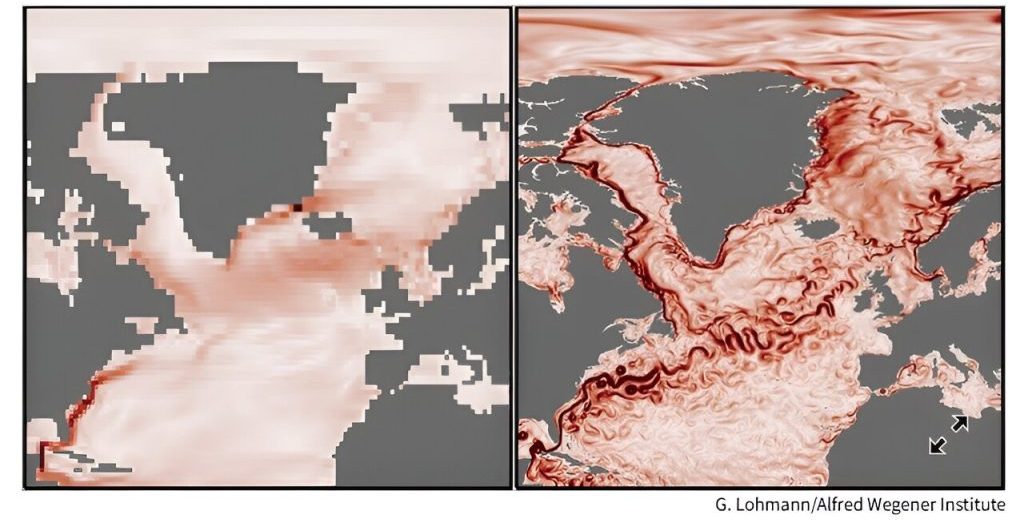
High-resolution climate models now reveal that global warming could lead to abrupt shifts in ocean currents and a near-collapse of convection in the North Atlantic — a phenomenon previously observed only in paleoclimate reconstructions. These rapid changes may trigger cascading effects across ecosystems, weather patterns, and coastal communities. And yet, many remain unaware of this unfolding crisis.
Recent studies reveal especially alarming changes in the Arctic Ocean. As sea ice retreats, marine heatwaves are becoming more frequent and intense. Extreme fluctuations threaten the entire marine food web, from plankton to top predators.
Sharing this scientific knowledge is not just important — it is a human right. Informed citizens are empowered citizens. When people understand how climate dynamics work, they are better equipped to support policies, demand action, and participate in protecting the environment.
By recognizing the ocean as an active and vulnerable part in climate regulation, we reinforce the urgency of marine conservation as part of our collective right to benefit from science. Protecting the ocean means protecting the future of all life on Earth.
Access to climate science must not be a privilege. It is a right — and a responsibility. Let us ensure everyone has the knowledge needed to defend our “climate friend”: the ocean.
References
- Gou, R., G. Lohmann, L. Wu, 2024: Atlantic meridional overturning circulation decline: Tipping small scales under global warming. Physical Review Letters, doi:10.1103/PhysRevLett.133.034201
- Gou, R. K. E. Wolf, C. J. M. Hoppe, L. Wu, G. Lohmann, 2025 The changing nature of future Arctic marine heatwaves and its potential impacts on the ecosystem. Nature Climate Change, doi:10.1038/s41558-024-02224-7

Gerrit Lohmann is a climate physicist at the Alfred Wegener Institute for Polar and Marine Research (AWI), and is a professor for Physics of the Climate System at the University of Bremen. His research focuses on Earth system modelling, abrupt climate transitions, and future climate projections. He has published over 350 scientific articles, supervised more than 80 students and PhDs, and was recently awarded an ERC Synergy Grant.